Can a Home Fail a Home Inspection?
Short answer: No — but it depends on the home and the buyer.
TL;DR
Homes don’t technically pass or fail a home inspection. Instead, a home inspection provides a detailed, neutral assessment of the home’s condition. Whether the findings are acceptable depends entirely on the buyer’s budget, goals, risk tolerance, and priorities. Understanding this reframes the inspection from a pass/fail test into what it really is: a powerful decision-making tool.
Does a House Pass or Fail a Home Inspection?
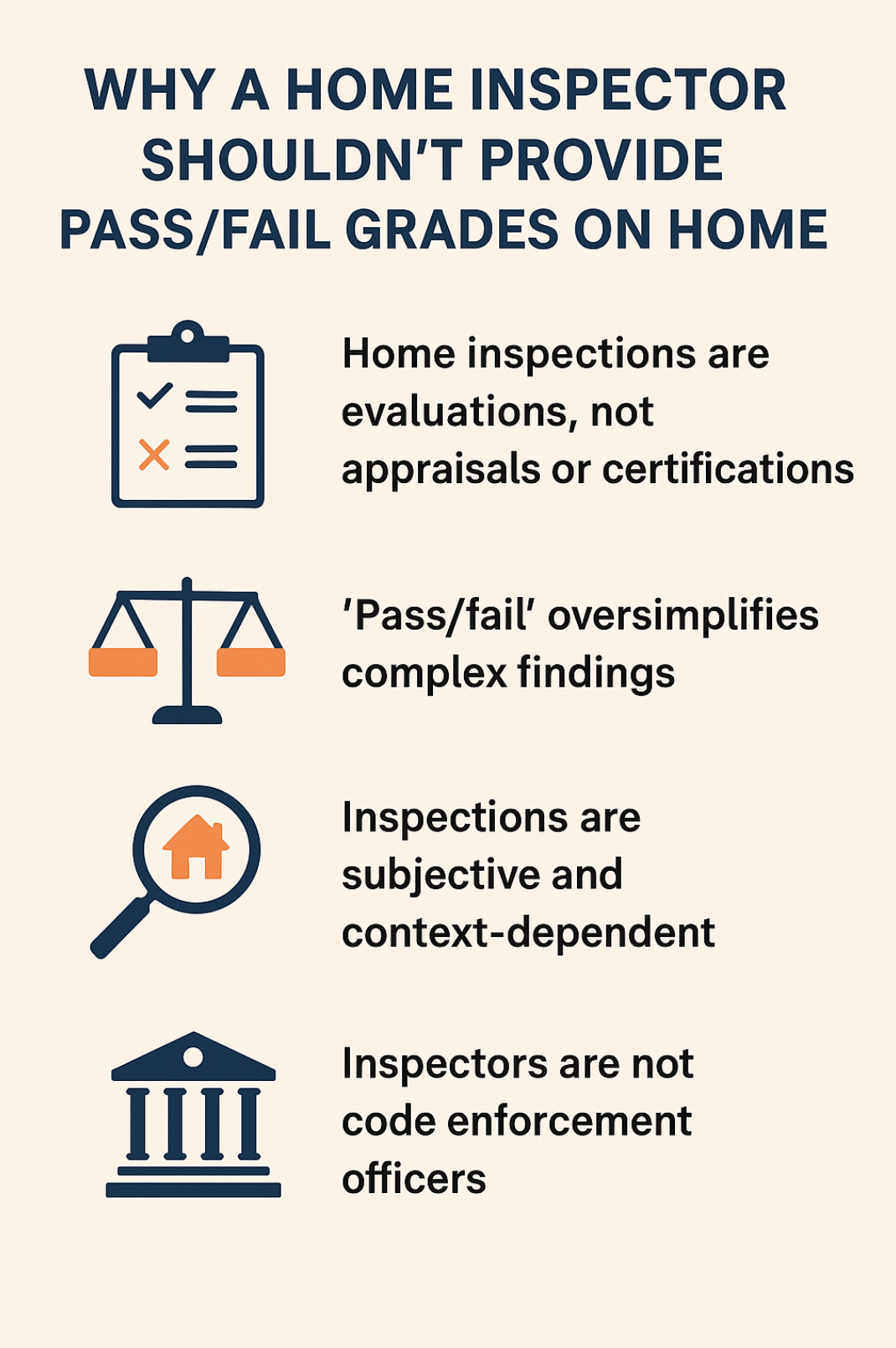
A home inspection does not result in a pass or fail grade. Instead, the inspector documents the condition of the home’s systems and components: roof, foundation, electrical, plumbing, and more, and presents findings in a detailed report. What constitutes an acceptable or unacceptable result depends entirely on the individual buyer’s budget, goals, and risk tolerance.
Why Pass/Fail Doesn’t Apply to Home Inspections
To understand why homes don’t “fail” inspections, consider these basic truths:
- Every home is different, with a unique set of issues
- Not all issues carry equal weight or urgency
- No universal pass/fail standard exists in the industry
- Buyers have different budgets, goals, timelines, and risk tolerances
What feels like a dealbreaker to one buyer may be completely acceptable to another. An older roof that still has serviceable life left might concern one buyer and not bother the next. A home may need repairs and still be entirely livable — it all depends on context.
What Actually Determines If a Home Is “Right” for You?
Before your inspection, ask yourself:
- What are my hard limits for major components like the roof, foundation, or electrical system?
- Is there something that’s a non-negotiable? Like mold?
- If the home needs significant repairs, is there room in my budget, or room to negotiate at closing?
- What does our budget support for repairs? How much would we absolutely need in credits to keep the deal intact, if the seller doesn’t do the repairs?
- What is my timeline, and can I accommodate repairs before or after moving in?
Pro tip: Write down your limits for major systems before the inspection and discuss them with your realtor. This gives you a clear framework for evaluating the inspection report when it arrives.
What Is the Goal of a Home Inspection Report?
The inspection report provides a detailed snapshot of the home’s condition at a specific point in time. A quality report will:
- Document observed defects, safety issues, and maintenance items
- Provide context around the severity of each issue
- Identify items that may need further evaluation from a licensed specialist
- Give buyers the knowledge they need to make informed decisions
The inspector’s role is that of a neutral third party — gathering and reporting information, not passing judgment on whether you should buy the home. That decision belongs to you, informed by the report, your realtor, and your own priorities.
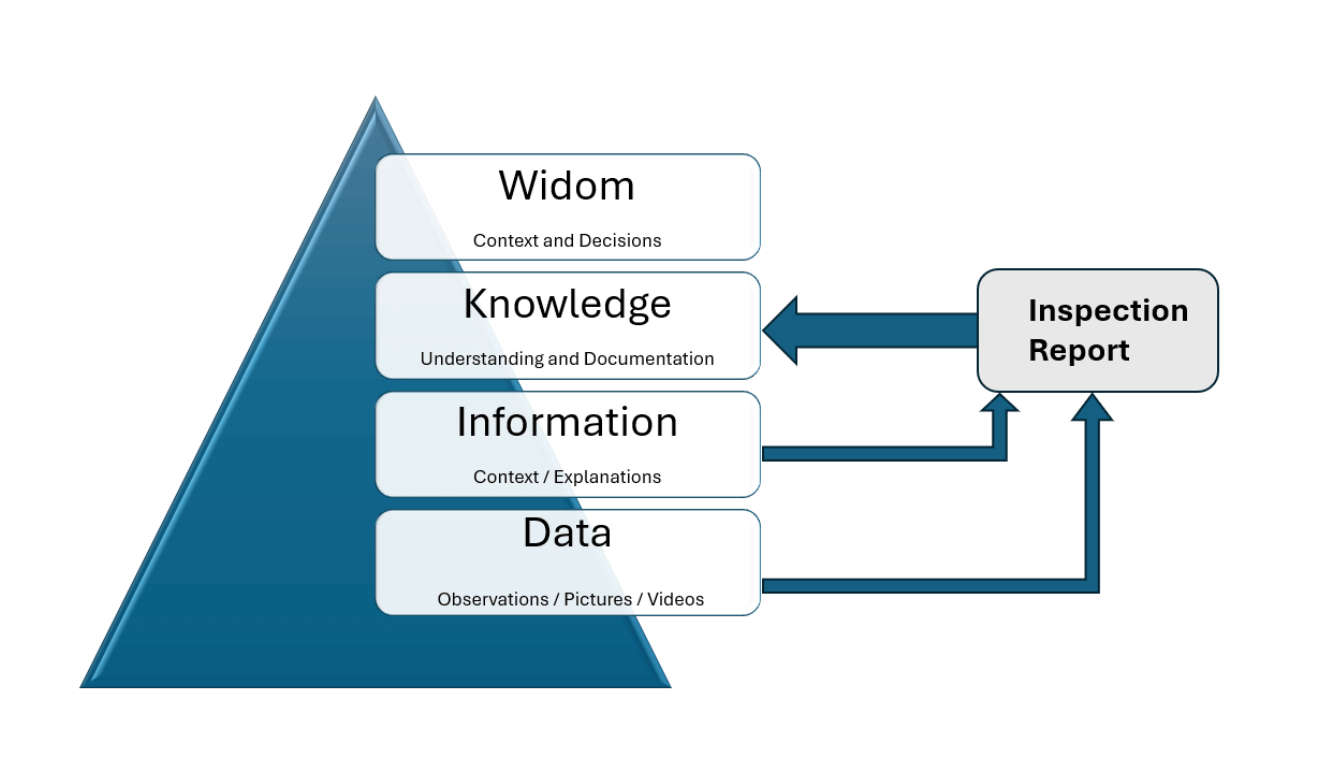
Knowledge → Wisdom → Decision
Think of the inspection process as a three-step journey:
- Knowledge — The inspector’s report gives you detailed information about the home’s condition
- Wisdom — Your inspector and realtor help you interpret what those findings mean in context
- Decision — Armed with both, you make the choice that’s right for you and your family
The Home Consultant Approach
The inspectors support doesn’t end at the inspection, we provide continued support. Here at Tech Inspect we take a more holistic approach to supporting our clients. Once your report is published, we’ll follow up with you and, you’ll be able to schedule additional consultations directly on our calendar to ensure you have the answers you need. Read more about our approach here.
Bottom Line
A home doesn’t pass or fail a home inspection, but the inspection does tell you everything you need to know to decide if the home is right for you. The value of the inspection isn’t a grade. It’s the knowledge, context, and confidence to make one of the biggest financial decisions of your life with clarity.
The Home Consultant Approach