
1. Introduction
Written by: Sean Struckmeyer | Tech Inspect Home Services LLC
If you’ve had a home inspection, and the inspector recommended a structural engineer, you should immediately follow up on that recommendation. Why? Because the inspector saw something, that’s not right with the home, and following up on that recommendation could prevent your dream home from being a nightmare home!
TL;DR — When Your Inspector Recommends a Structural Engineer, Don’t Skip It
What’s the difference between a home inspector and a structural engineer? A home inspector is a generalist – they evaluate the entire home and flag concerns, but are not licensed to perform engineering services or technically exhaustive evaluations. A structural engineer is a licensed specialist who can perform load calculations, assess foundation and framing integrity, diagnose root causes, and provide stamped repair plans. The two roles complement each other; they don’t overlap.
When should a structural engineer be called in? Key triggers include visible foundation or wall cracks (especially horizontal or stair-step), sloping floors, sticking doors or windows, water intrusion near the foundation, undocumented renovations, and any planned addition that adds significant weight to the structure.
What does a structural engineer provide that an inspector can’t? A stamped written report with diagnosis, cause, scope of damage, and prescriptive repair plans. That report can be used to negotiate price, require seller repairs, support permit approval, or – in the best case – provide reassurance that no further action is needed.
What does it cost to ignore the referral? Potentially tens of thousands of dollars in emergency structural repairs after closing — far more than the cost of an engineering evaluation upfront.
Bottom line: If your inspector recommends a structural engineer, follow up immediately. It’s not an upsell – it’s the inspector acknowledging the limits of their role and protecting your investment.
2. Home Inspector vs. Structural Engineer — What’s the Difference
Home Inspector: First Line of Defense, Generalist by Nature
The home inspector is your first line of defense, they review the entire structure, provide a detailed report, and may provide a recommendation to have an engineer take another look at the property, depending on what was observed.
Home Inspectors are trained to be generalists in building science. While the InterNACHI training program provides a fantastic training program that covers the entirety of the home, we are not trained engineers, and we do not provide engineering services. Due to the time constraints, of a home inspection the home inspector is not able or required to perform a technically exhaustive inspection of all of the home’s systems or components. The value in the home inspection comes from the ability to find things and then provide recommendations where a focused and technically exhaustive evaluation is required to best support the client.
Technically Exhaustive is defined as: A comprehensive and detailed examination beyond the scope of a real estate home inspection that would involve or include, but would not be limited to: dismantling, specialized knowledge or training, special equipment, measurements, measurements, calculations, testing, research, analysis, or other means.
In fact, according to the InterNACHI Standards of Practice, Section 2.1 (Limitations) “An inspection is not technically exhaustive”, and Section 2.2 (Exclusions) “the home inspector is not required to: offer or perform any engineering services or offer or perform any trade or professional service other than a home inspection. This prevents the inspector from entering a conflict of interest by performing additional services or identifying issues that then need ‘engineering services that the inspector provides. It also makes the overall home inspection more affordable for the clients.
Structural Engineer: Specialist, Licensed to Evaluate Structure
So what is the role of structural engineers and how do their services differ?
- Engineers can provide a comprehensive and detailed examination that requires specialized knowledge or training, special equipment, performing measurements, calculations, conducting testing, research, and analysis of the structure. This allows the engineers to pick up where the inspector had to leave off due to the limitations of the services provided.
- A structural engineer has an engineering degree, work experience, and licensure, giving them authority to analyze structural systems and load paths.
- Engineers can perform calculations, assess foundational/ framing integrity, moisture/drainage impacts, and overall structural safety, things outside a typical home inspection.
- Engineers can provide prescriptive solutions to resolve problems and then verify that those solutions were installed correctly. A prescriptive solution is an exact solution.
3. Why an Inspector’s Recommendation Should Be Taken Seriously
Potential Structural Issues Are Often Complex, Subtle or Hidden
- Problems like foundation settlement, wall bowing, load-bearing failure, or drainage-induced structure damage may not be obvious on the surface. A licensed engineer is trained to detect and evaluate these.
- What might appear as a simple crack or “cosmetic” issue could indicate deeper structural instability.
- Structural beams support the overall building. Ensuring they are properly functioning and able to support the structure as designed is incredibly important to the longevity and continued use of the property.
Example Video of an Inspector Discussing Previous Work Performed by an Engineer and Contractor:
4. What a Structural Engineer Can Provide That a General Inspector Can’t
- In-depth evaluation of foundation, load-bearing walls, beams, floor joists, roof trusses, drainage and soil interactions. Depending on the service and severity of the problem, engineers can provide load path calculations to ensure proper stability and overall structural integrity.
- Often, a product of the engineering service is a written, stamped engineering report with diagnosis, causes, scope of damage, and if needed, detailed repair plans to be performed by another contractor. Thus, ensuring that the needed repairs are appropriate and no conflict of interest should be incurred.
- Real, actionable recommendations (or reassurance), including structural calculations, prescriptive plans, drawings, and requirements to resolve issues. There’s always the chance that the engineers determine there’s no further issue, which is the best-case scenario. However, if there are issues, the engineers report coupled with the inspector’s report, should provide significant negotiating power to clients and agents if the client wishes to proceed with the purchase of the home.
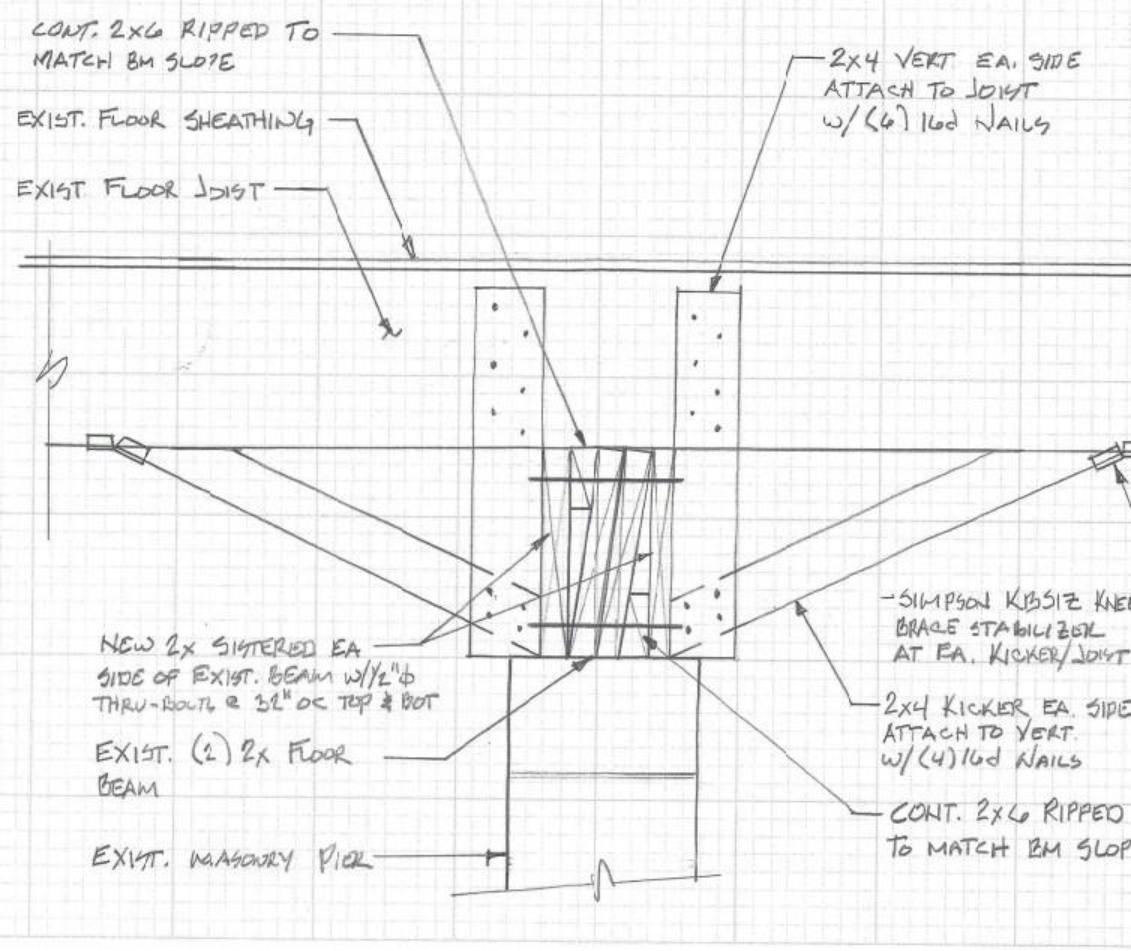
Example of an Engineer Report where support beams were twisted and the engineer prescribed a fix.
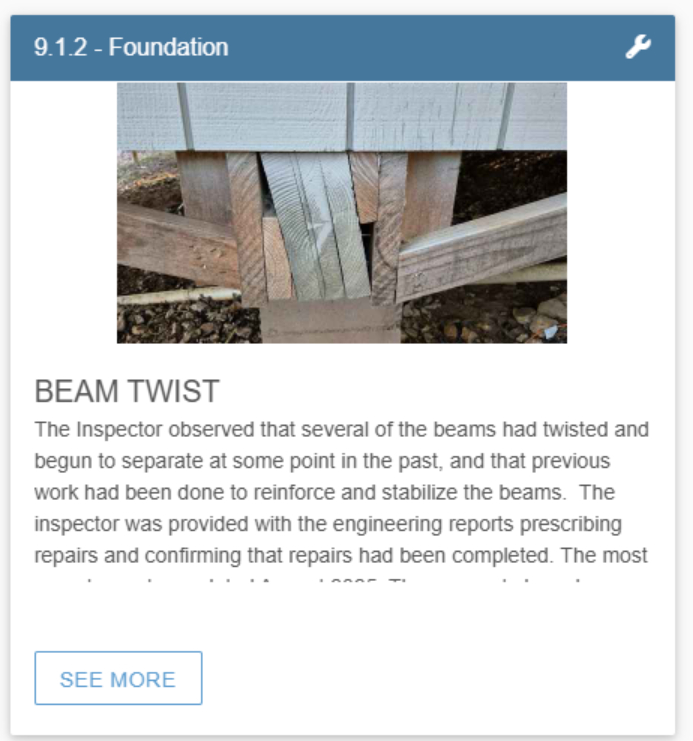
Here is an example of the ‘fix’ as captured in the inspection report:
5. Common Scenarios When a Structural Engineer’s Input Is Especially Important
- Visible foundation or wall cracks, especially horizontal, stair-step, or wide cracks.
- Uneven or sloping floors, sagging ceilings, doors/windows sticking or misaligned, these can be signs of settling or shifting of the homes’ structure or foundation.
- Water intrusion, drainage problems, or moisture that could compromise foundation or framing over time.
- Older homes, homes with undocumented renovations or additions, or homes in areas with soil challenges, these can exacerbate the chances of hidden structural flaws.
- Before major renovations or additions (removing load-bearing walls, adding a second story, expanding footprint) to verify existing structural capacity. Anytime you make a significant change to a structure that adds weight the structure needs to be reviewed to ensure additional bracing or work doesn’t need to be completed.
- For Example: Adding concrete tiles to a roof that was previously shingled would significantly increase the ‘dead’ load of the roof system, and the existing structure may not be able to support it.
- Want to add a hot tub to your deck? Can it support the weight? Better have an engineer check it first before putting all that extra weight on.
6. The Value: Cost vs Benefit
- Engaging a structural engineer may add cost and time, but their report can prevent tens of thousands of dollars in unnecessary or emergency repairs later.
- If you’re buying a home, an engineer’s findings may give you leverage in negotiating price, or help you decide to walk away rather than risk major structural defects post-purchase.
- If you plan to renovate or sell, having their stamped report can simplify permit approval, provide reassurance to buyers, and ensure any structural changes are safe and code compliant. This provides you with protection and improves your ability to market and sell the property.
- You can also have an engineer confirm repairs after they have been completed to ensure that the repairs in question were performed to the specifications required to adequately repair. This ensures that everything was done appropriately and provides a paper trail to support selling or purchasing the home.
7. How to Choose a Good Structural Engineer
- Confirm licensure and training. To get a professional engineering license in Missouri, a structural engineer must have a bachelor’s degree in an ABET-accredited engineering program, pass the NCEES Fundamentals of Engineering (FE) exam, gain at least four years of work experience under a licensed engineer, and pass the NCEES Principles and Practice of Engineering (PE) exam. The state’s licensing board may require a separate Structural Engineering (SE) exam depending on the applicant’s specific experience and role.
- Prefer engineers with local experience, one’s familiar with local soil, climate, common building practices (especially in your region). Different climates have different soils. For example. In Missouri, we have clay soil and rocky ground at the same time which can pose additional challenges.
- Make sure the evaluation includes a full written and stamped report with findings, photos, causes, and recommended repairs.
8. Conclusion: If Recommended, Hire the Engineer
If your home inspector ever recommends further evaluation by a structural engineer, don’t scoff at the recommendation. Take it seriously. These services are not at odds with each other but rather they complement each other by providing additional support, information and details for the clients. At the end of the day, when you are making significant purchases and financial investments, the more information you can gain to support your decision making the better. While we get it that the idea of hiring a specialist and spending more money is not a thrilling thought. The benefits of having the further evaluation could literally save you tens-of thousands of dollars. So, investing in additional services is very important decision and needs to be done immediately after the inspection.