
Written by: Sean Struckmeyer | Tech Inspect Home Services LLC
l. Introduction
Often during an inspection, as I shine my flashlight around in the attic, I’ll encounter a yellowish/gold discoloration on the wood components in the attic. To the untrained eye, this may appear to be mold, but it is not. It is attic ambering. In this article, we’ll unpack what it is and some of the likely causes. In the St. Louis area due to our hot summers, high humidity, and extreme temperature changes, this is a common finding.
ll. What Exactly is Attic Ambering?
Attic ambering, also known as “wood sweating” or “honeying,” occurs when sap naturally present in wood beams oozes out due to elevated attic temperatures. This phenomenon is particularly common in attics with inadequate insulation or ventilation. The sap initially appears as sticky droplets, ranging in color from amber to dark red, which can harden into crystalline formations over time.
- The Science: Attic Ambering is the result of resin or more specifically Lignin seeping out of the wood. Lignin is a complex, rigid natural polymer found in the cell walls of vascular plants (i.e. trees), acting as “nature’s glue” to provide structural integrity, strength, and water transport capability. In the Greater St. Louis area an extremely common building material is Southern Yellow Pine. It’s used to construct many, trusses, rafters, joists and other building materials. Southern Yellow Pine (SYP) generally contains higher levels of lignin (approximately 25%–31%) compared to typical hardwoods (which are generally 18%–25%). It’s important to note that all wood contains lignin and that all wood could experience this phenomenon.
- The Process: So what causes the lignin to escape the wood and form attic ambering? The main culprit is sustained high levels of heat.
- Heat: Intense summer heat in unventilated attics causes the sap/resin to migrate to the surface.
- Heat: Intense summer heat in unventilated attics causes the sap/resin to migrate to the surface.
In St. Louis, attic temperatures can easily exceed 130* F, and if not properly vented this heat cannot escape, becoming stagnant and remaining warm all day and night vs cooling down at night.
- Heat: Intense summer heat in unventilated attics causes the sap/resin to migrate to the surface.
- Oxidation: When the lignin escapes, exposure to air causes the lignin/resin to turn a golden, amber, or brownish hue.
- Heat: Intense summer heat in unventilated attics causes the sap/resin to migrate to the surface.
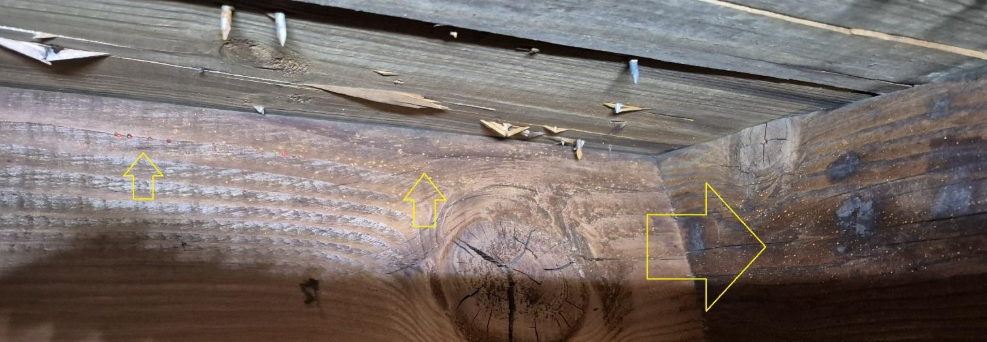
Example of “Spotted Attic Ambering”
III. The Big Question: Ambering vs. Mold
While Attic Ambering and mold are both natural organic materials, we should understand the difference between them to prevent misidentification. The following table breaks down the visual differences between the substances. Click here to read more about mold we’ve encountered in attics.
| Characteristics | Attic Ambering | Mold |
|---|---|---|
| Color | Golden, yellow or reddish brown (may look like varnish). Often follows the grain or can be spotted. |
Can be multiple colors—black, white, green or gray. Can be spotted or may grow in irregular patterns. |
| Texture | If it’s fresh, it may be slightly tacky (like honey) or if it’s dried, it’s hard to the touch. |
Fuzzy and soft |
| Surface | Often appears to be baked into the wood or oozing out. | Sits on top of the wood, can be easily scratched or smeared. |
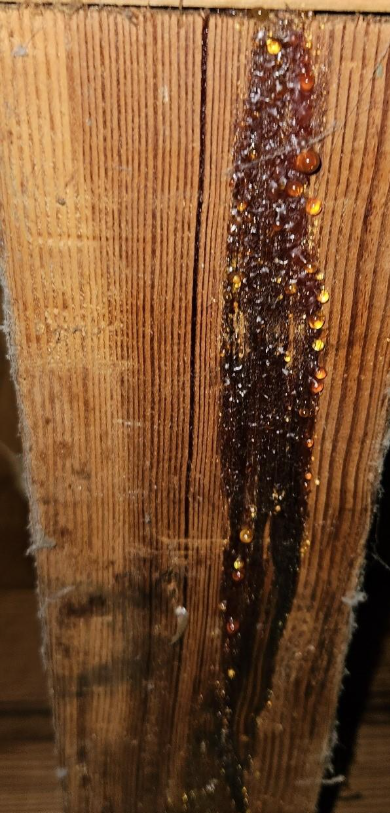
Here’s an example of Hardened Attic Ambering (Notice how it follows the grain)
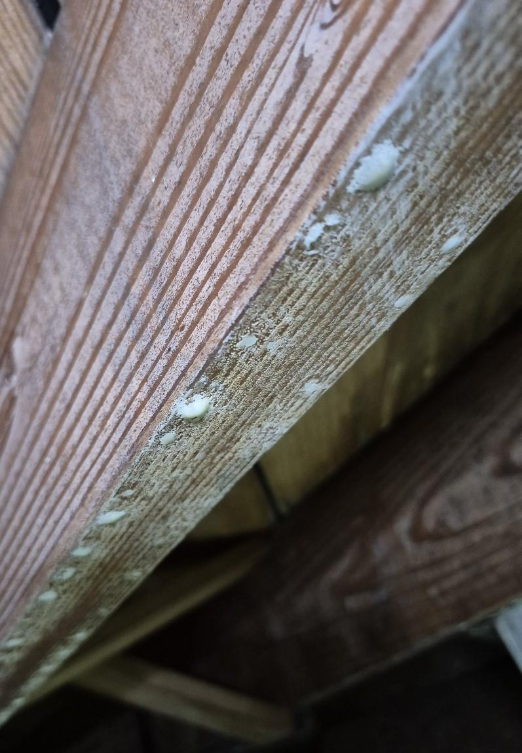
Here’s an example of ‘Fuzzy’ Mold:
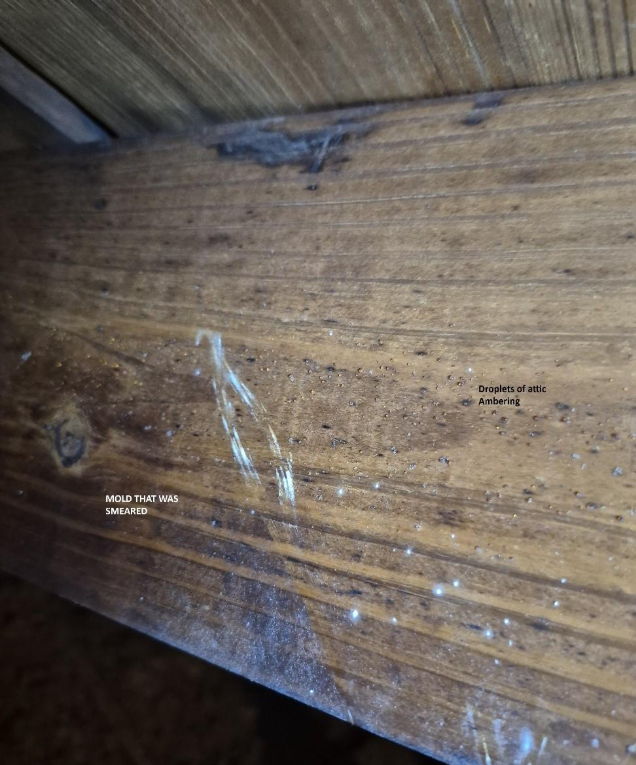
Here’s an Example of Attic Ambering and Mold On the Same Rafter – the ambering appears as small droplets that run along the grain, whereas the mold is white and fuzzy and could be easily smeared.
IV. Why Does It Happen? (The Causes)
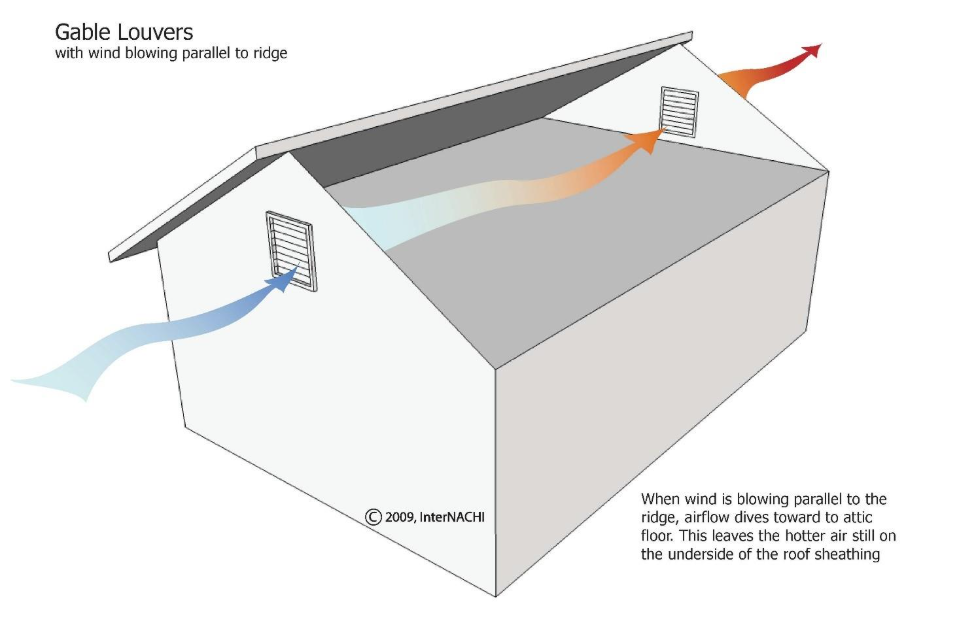
- High Attic Temperatures: A poorly vented attic can allow temperatures to rise and the air to become stagnant. The key is ensuring adequate air flow exists. The most efficient attic ventilation system is a ridge vent and soffit ventilation system. Most often when I do encounter attic ambering it is in an attic with gable vents. Many older ranch style and bungalow style homes in the St. Louis area are equipped with this ventilation setup. If the louvers area damaged, or blocked then it will reduce the effectiveness of the ventilation.
- Age of the Home: Attic ambering is often seen in newer construction (first 5–10 years) as the wood “settles” and acclimates but can happen anytime. I’ve encountered attic ambering in 75 year old homes here in St. Louis.
- Manufacturing Process: Sometimes the pressure and heat used to manufacture OSB/Plywood bring resins to the surface before the wood is even installed. Don’t believe me? Go to the lumber section of home depot when they get a fresh pallet of wood in. You’ll see it.
V. Is Attic Ambering Dangerous?
- Does it pose a concern to Structural Integrity?
- Verdict: No. It is purely cosmetic and does not weaken the wood.
- Secondary Concern: Due to the cause being prolonged heat and moisture which CAN weaken the wood over time potentially compromising the structural integrity of the attic, it would be best to address this if the home inspector notes it in the report.
- Can it attract bugs?
- Bugs: The sugary nature of the sap may attract insects, including ants and fruit flies
- Does it pose a Health Concern:
- Verdict: No. Unlike black mold (Stachybotrys), ambering releases no spores and poses no respiratory threat.
- Real Estate Impact:
- The Issue: It looks scary to potential buyers.
- The Fix: Education. A qualified home inspector can easily distinguish it from mold, preventing a deal from falling through, and providing context of what is enabling it to occur along with suggestions on how to fix it.
VI. Prevention and “Treatment”
- Do You Need to Remove It? Generally, no. It is a natural characteristic of the wood.
- If you did want to clean it:
- For Fresh Sap: Use a soft cloth dampened with warm water and mild soap to gently wipe away the sap.
- For Hardened Sap: Carefully scrape off the crystals using a plastic scraper to avoid damaging the wood surface.
- If you did want to clean it:
- Best way to Prevent it is to Improve Attic Ventilation:
- Installing soffit vents, ridge vents, additional turtle vents or attic fans can lower attic temperatures, potentially slowing the process (though once it’s ambered, it usually stays ambered).
- Cosmetic Fixes:
- If selling a home and the look is a dealbreaker, mention encapsulation (painting over it with specialized primer), though emphasize this is usually unnecessary expense.
VII. Frequently Asked Questions (FAQ)
- Why is my attic wood turning yellow? It may be because of attic ambering. This is where the natural resin leaches out of the wood. The cause of this is of greater importance, as it is caused by higher attic temperatures. This is generally a good sign that the attic is not properly vented and may require additional ventilation. This is where we would recommend having a roofing contractor review your ventilation and ensure that it is adequate.
- Can heat cause wood to change color? No, but it may cause the resin or “sap” to leach out of the wood turning it a yellow or golden brown color.
- Does attic ambering smell? It can, sometimes a slight woody/pine scent, unlike the musty odor of mold, but often it’s not a strong smell.
- How do I test for attic ambering? If you notice ambering, taking a knife or screw driver and try to scrape it. If it’s hardened it’ll be difficult to scrape off. Unlike mold which can be easily smeared.
VIII. Conclusion
Attic Ambering, is a yellowish-gold discoloration on attic wood that homeowners often mistake for mold. Attic ambering occurs when lignin (a natural polymer in wood) seeps out due to high attic temperatures, particularly common in poorly ventilated attics during hot summers. Southern Yellow Pine, frequently used in St. Louis construction, is especially prone to this because of its high lignin content.
In this article I clarified the key differences between ambering and mold: ambering appears golden or amber-colored, feels tacky when fresh or hard when dried, and follows the wood grain, while mold is fuzzy, sits on the surface, and comes in various colors like black or green.
The main cause is inadequate attic ventilation allowing temperatures to exceed 130°F. While ambering itself is purely cosmetic and poses no structural or health risks, the underlying heat and moisture issues could potentially weaken wood over time. The phenomenon is most common in newer homes but can occur at any age and has been observed in older homes.
Treatment is generally unnecessary, though homeowners can improve attic ventilation through ridge vents, soffit vents, or attic fans to prevent further occurrence. It’s important that proper identification occurs and a qualified home inspector can help prevent unnecessary alarm during real estate transactions.