Written By: Sean Struckmeyer | Tech Inspect Home Services
Radon is a silent threat lurking in homes across America and understanding how to test it is crucial for protecting your family’s health. At Tech Inspect Home Services LLC, we offer short-term radon as an affordable way to determine if your home has radon levels that require mitigation. This comprehensive guide will walk you through everything you need to know about radon and short-term testing methods.
TL;DR – Short-Term Radon Testing: What You Need to Know
What is radon? A colorless, odorless radioactive gas that seeps into homes through foundation cracks. It’s the second leading cause of lung cancer in the U.S. – undetectable without testing.
When must you act? The EPA action level is 4.0 pCi/L. Between 2–4 pCi/L, mitigation is still worth considering. The average U.S. home measures 1.3 pCi/L.
How does the test work? A Continuous Radon Monitor (CRM) is placed at the lowest lived-in level and runs for 48 hours, recording levels every hour. Results are available within 24 hours of pickup, fast enough for real estate contract timelines.
What are closed-house conditions? Windows and exterior doors must stay closed for 12 hours before the test and the full 48 hours during it. Opening windows dilutes radon and produces a false low reading. Normal HVAC use is fine with the fan on “Auto”, whole-house fans must stay off.
What if levels are high? A mitigation contractor can install an active soil depressurization system that typically reduces levels by up to 99%. Always retest after mitigation to confirm.
Bottom line: For homebuyers, radon testing should be a non-negotiable add-on to every home inspection. Tech Inspect uses calibrated CRM equipment and is certified by both InterNACHI and IAC2, with results typically bundled and delivered alongside your inspection report.
What Is Radon and Why Should You Care?
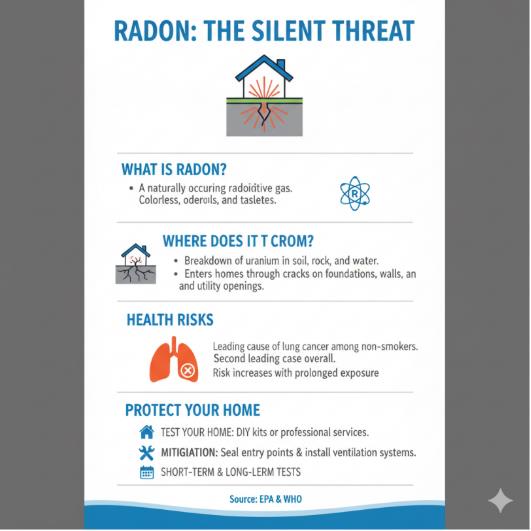
Radon is a naturally occurring radioactive gas that forms when uranium in soil, rock, and water breaks down. It’s colorless, odorless, and tasteless, making it impossible to detect without proper testing. The gas seeps into homes through cracks in foundations, gaps around pipes, and other openings.
The Health Risks of Radon Exposure
Radon is the second leading cause of lung cancer in the United States, responsible for approximately 21,000 deaths annually. The Environmental Protection Agency (EPA) estimates that one in fifteen homes has elevated radon levels. Long-term exposure to high radon concentrations significantly increases lung cancer risk, particularly for smokers.
The danger lies in radon’s radioactive decay products, which can become trapped in your lungs when you breathe. Over time, these particles damage lung tissue and can lead to cancer.
Fortunately, there are multiple methods to mitigate radon and effectively reduce the amount of radon present in your home. Testing to establish the baseline measurement and then re-testing after mitigation is also important.
EPA Action Level: 4.0 pCi/L
The EPA recommends fixing your home if radon levels are 4 pCi/L (picocuries per liter) or higher. Because there is no known safe level of radon exposure, the EPA also recommends considering fixing your home for levels between 2 and 4 pCi/L.
For reference, the average indoor radon level in American homes is about 1.3 pCi/L, while outdoor air averages 0.4 pCi/L.
Understanding Short-Term Radon Testing
Short-term radon testing is the fastest way to get initial readings of radon levels in your home. A typical short-term radon test is 2-7 days. The short-term radon test that Tech inspect Home Services LLC employs is a 48 hour test. This allows enough time in contract period of a home for us to run 1 or maybe 2 tests during this time frame to provide better results.
Short-Term Testing must be conducted under certain conditions to achieve accurate results. This will be discussed more below.
Types of Short-Term Radon Tests
There are multiple types of radon tests and testing machines available. Some require that the testing medium be sent to a laboratory for analysis, such as the at home tests.
Charcoal Canisters: These passive devices absorb radon from the air over 2-7 days. They’re inexpensive and widely available but must be sent to a laboratory for analysis. This generally the type of test that an DIY or At-Home test is made from.
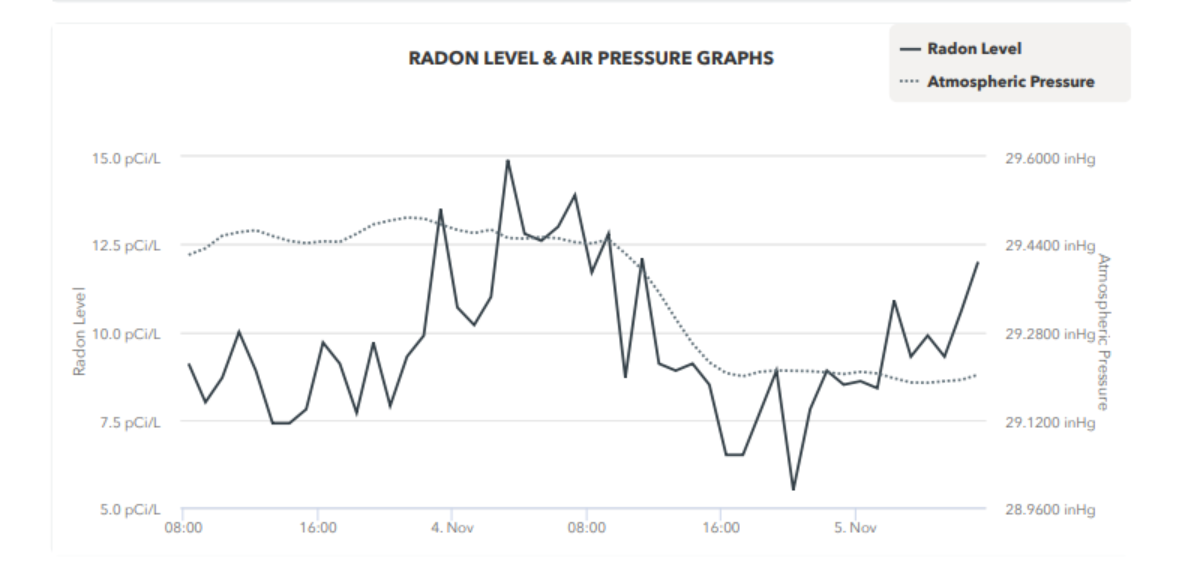
Continuous Radon Monitors (CRM): Digital devices that provide real-time radon readings and can detect fluctuations in radon levels throughout the testing period. These are more expensive but offer the most detailed information. CRM machines take measurements every hour, so during a 48 hour test, 48 measurements will be taken, graphed and averaged out to determine the radon levels. Tech Inspect Home Services employes an advanced Continuous Radon Monitor CRM monitoring system so that we can provide client with immediate test results without waiting. CRM machines are calibrated ever year and then also tested against another machine as a quality control check. These steps ensure that each individual machine is providing accurate measurements and results.
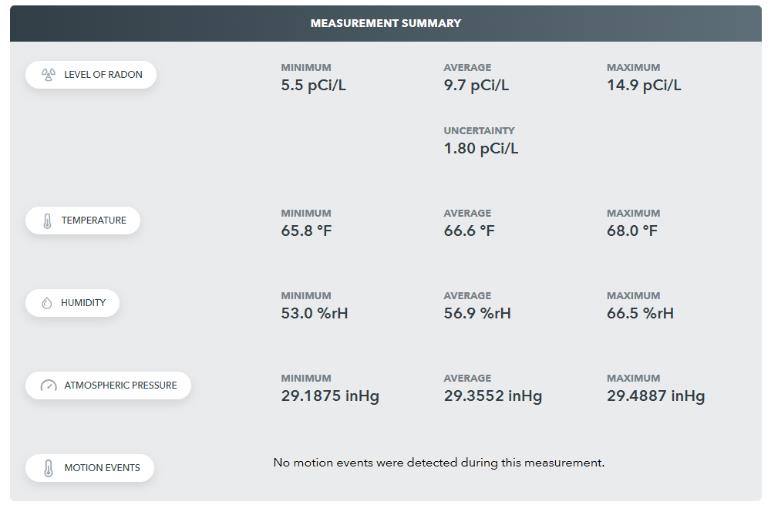
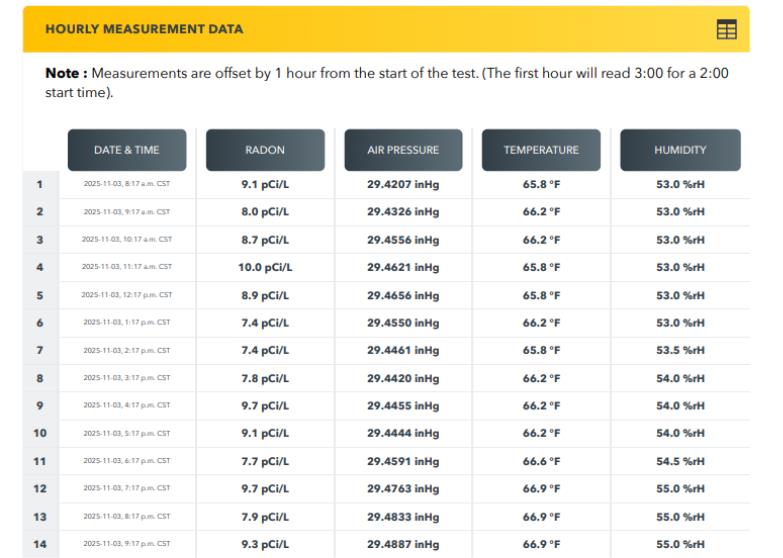
The CRM’s are able to provide a lot of information including environmental measurements. An example of some report data is shown below:
How to Conduct a Short-Term Radon Test
Proper testing procedures are essential for accurate results. Follow these steps for reliable short-term radon testing:
Preparation and Placement
Choose the lowest lived-in level of your home for testing. This is typically a basement or first floor, not a crawl space or uninhabited area. Place the test device at least 20 inches above the floor but less than 6 feet above the floor. In a location where it won’t be disturbed, at least 3 feet from exterior windows and doors.
Keep the device away from drafts, high heat, high humidity, and exterior walls. Avoid kitchens, bathrooms, and laundry rooms where humidity and air movement can affect results.
Closed-House Conditions
Maintain closed-house conditions for 12 hours before testing and throughout the test period for a total of 72 hours. Keep all windows and exterior doors closed except for normal entry and exit. Don’t operate fans or ventilation systems that bring in outside air. However, you can run air conditioning and heating systems that recirculate indoor air.
Maintaining closed-house conditions is the most important factor for an accurate test. Doors and windows must remain closed for the 12 hours immediately preceding the test and for the full 48 hours of the testing period.
- Allowed:
- Normal entry and exit through exterior doors is permitted.
- Attached Garage: Normal entry and exit of vehicles is permitted with the garage door being closed as soon as possible.
- Normal use of A/C and Furnace with the Fan set to ‘Auto’
- NOT Allowed:
- Opening any windows or exterior doors for ventilation (even for a short time or on a nice day).
- Attached Garage: Leaving the Garage Door open for an extended period of time (longer than is required for a vehicle to enter/exit)
- Use of A/C Furnace with the Fan set to ‘Always On’ or ‘Continuous’
- Use of Whole House Fans: these should not be operated at all during the 72 hours.
- Use of a window or wall mounted A/C, these should be set to circulate the Indoor Air and Not draw in outdoor air
- Why? Opening the house will dilute the radon levels, resulting in an inaccurate, potentially lower-than-actual reading.
2. Do Not Disturb the Testing Device
The radon testing machine must remain in the same location and operate continuously to gather valid data.
Rule: The radon machine must NOT be moved, disturbed, or otherwise tampered with during the 48-hour test period.
Consequence of Disturbance: If the machine is moved, disturbed, covered, or tampered with, the test results may be voided.
Testing Duration
For short-term tests, leave the device in place for the manufacturer’s recommended time, typically 2 days. Longer testing periods can be performed with agreement between Tech Inspect and the Client. Longer tests will require additional charges and generally provide more reliable results. The device must not be disturbed during testing. In fact the CRM monitor that is being used can detect motion, even someone walking by it and it will record those events.

Interpreting Your Radon Test Results and the Report
Radon is measured in picocuries per liter of air (pCi/L). The EPA recommends taking action if your radon level is 4 pCi/L or higher. However, any radon exposure carries some risk, and the EPA also recommends considering mitigation for levels between 2 and 4 pCi/L.
Tech Inspect provides a Radon report through our reporting software that documents the property, when the test was started, the location of the test and the results. Additionally, the data collected by the CRM is used to create an additional report that is attached to the Inspection report. The report generated by the CRM is very detailed and invaluable for understanding, the results and if anything happened during the testing period that could have influenced the results.
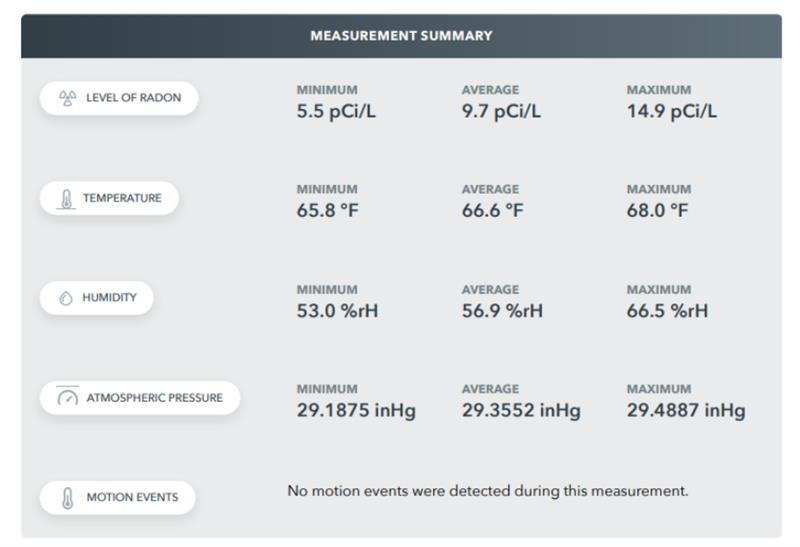
The following screenshots are example data from a report, to show how detailed the reports and data collection from the CRM machines are.
Example of the Summary View of a 48 Hour Radon Test:
Example of the Hourly Measurement Data taken from a 48 Hour Radon Test:
Example: Radon Level and Air Pressure Graph from a 48 Hour Radon Test showing the fluctuations for radon levels over time:
When to Retest
Short-term tests provide a snapshot of radon levels during the testing period. Radon concentrations can vary significantly based on weather, season, and daily fluctuations. If your short-term test shows elevated levels, follow up with either another short-term test or a long-term test lasting at least 90 days for a more accurate annual average. For example, if you tested in September, having a follow up test in November would be wise as now the environmental conditions have changed, the heat is probably now running, and the house is staying closed up more. Re-testing after the seasons change can give you a much better average.
Consider retesting every two years, even if previous results were low, and retest after any significant home renovations or changes to your heating and cooling systems. Anything done to the house that ‘seals it up’ or changes how the house draws air can increase the Radon levels in the home. Re-testing after these changes is advised to ensure that levels have not increased.
Benefits of Short-Term Radon Testing
Quick Results: Get initial readings in as little as 2-7 days, making short-term tests ideal for real estate transactions.
Affordable: Short-term tests performed by a testing company are affordable.
Real Estate Friendly: Short-term testing fits within typical home inspection timelines, making it practical for buyers and sellers. In fact, the test can be setup and started at the same time as the home inspection and then the report will be available within 24 hours of the device being retrieved resulting in a short turnaround time.
Short-Term vs. Long-Term Radon Testing
While short-term testing offers speed and convenience, long-term testing provides a more accurate picture of your home’s average annual radon levels. Long-term tests run for 90 days to one year and account for seasonal variations in radon concentration.
For the most reliable results, the EPA recommends following up an elevated short-term test with a long-term test. If you need immediate answers for a real estate transaction, two short-term tests conducted under closed-house conditions can provide sufficient information for decision-making.
Taking Action on High Radon Levels
If your test results show radon levels at or above 4 pCi/L, radon mitigation is recommended. A qualified radon mitigation contractor can install systems that typically reduce radon levels by up to 99%.
Even if Radon levels are not above the 4 pCi/L threshold, if they are in the recommended action levels, you should still consult with a mitigation contractor to keep levels in check. Keeping in mind that if the test if performed in the summer and below the action level, levels may rise in the winter and exceed the action level.
Common Radon Mitigation Methods
The most effective mitigation technique is active soil depressurization, which prevents radon from entering your home by drawing it from beneath the foundation and venting it safely outside. Other methods include sealing cracks and openings, installing radon-resistant features during construction, and improving home ventilation.
Choosing the Right Radon Test
Select a radon test kit that meets EPA requirements and is certified by a national radon proficiency program. Many state radon offices provide lists of certified test kits and testing professionals. You can also hire a certified radon measurement professional to conduct testing if you prefer professional oversight. Here at Tech Inspect Home Services, our inspectors are trained and certified by InterNACHI and the International Association of Certified Indoor Air Consultants (IAC2).
Consider your timeline, budget, and the level of detail you need when choosing between different short-term testing options. For real estate transactions, consult with your real estate agent and inspector about testing requirements and timelines.
Protecting Your Family from Radon
Short-term radon testing is your first line of defense against this invisible health hazard. The testing process is simple, affordable, and can potentially save lives by identifying dangerous radon levels before they cause harm.
Don’t wait to test your home for radon. Whether you’re buying a new house, concerned about your current home, or simply being proactive about your family’s health, short-term radon testing provides quick answers and peace of mind. Take action today to ensure your home’s air is safe to breathe.
Remember, radon testing is not a one-time event. Regular testing every few years ensures your home remains safe as conditions change over time. With short-term testing options readily available and easy to use, there’s no reason to delay protecting your family from this preventable health risk.
Short Term Testing FAQ’s:
Is a Short Test Radon Test needed when buying a home?
Yes, Radon is a naturally occurring gas, but the levels should not be elevated. Short-Term testing during the contract phase, coinciding with your home inspection should be part of every home buyer’s plan.
How long does a Radon Test Take?
A short term radon test will run for 48 hours from the time the machine is placed and test started.
How long do closed-house conditions last for a Radon Test?
The total time for closed house conditions is 72 hours (12 hours prior to the test starting and 48 hours during the test).
What happens if closed house conditions aren’t maintained during the Radon Test?
The radon levels may be diluted rendering the test inaccurate, which may require additional testing, and testing fee’s.
Can I open the door during a Radon Test?
Yes, you can open the door but only long enough to go in and out. Same for garage doors, they should only be left open long enough for the vehicle to enter/exit.
Can I open windows if the weather is nice during the Radon Test?
No, windows must remain closed during testing.
Can I run the A/C or Furnace during Radon Testing?
Yes, they can be ran as you normally would use them, but with the fan in ‘Auto’ Mode, not continuous. It should only kick on and circulate air when it’s needed as part of normal operation.
How much does a Short Term Radon Test cost?
Typically, between $125-$200. Check out our Instant Quote Tool to See current Pricing. If ordered in with a home inspection, a reduced rate is available.
Don’t Let an Invisible Threat Compromise Your Family’s Safety
In Summary: Radon is the second leading cause of lung cancer in America, claiming 21,000 lives annually—yet it’s completely preventable with proper testing and mitigation. As a silent, invisible gas, radon can only be detected through professional testing, making it a critical step in protecting your home and loved ones.
At Tech Inspect Home Services, we make radon testing simple, fast, and affordable. Our certified inspectors use state-of-the-art Continuous Radon Monitors (CRM) that provide accurate, detailed results in just 48 hours—perfect for home buyers working within tight contract timelines or homeowners seeking peace of mind.
Take Action Today:
🏠 Buying a Home? Don’t skip radon testing. Make it part of your home inspection process and know exactly what you’re getting into before closing.
🔍 Current Homeowner? When was your last radon test? Protect your investment and your family’s health with testing every two years or after major renovations.
⏰ Time-Sensitive? Our 48-hour testing fits seamlessly into real estate transaction timelines, with results delivered within 24 hours of device pickup.
One in fifteen homes has dangerous radon levels. Is yours one of them?
Don’t gamble with your family’s health. Contact Tech Inspect Home Services today to schedule your professional short-term radon test. Our InterNACHI and IAC2 certified inspectors are ready to provide the accurate, detailed testing you need to make informed decisions about your home’s air quality.
📞 Schedule Your Radon Test Now and take the first step toward a safer, healthier home. Because when it comes to radon, the only way to know is to test.