Why Your Gutter Downspouts Need to Drain Away From the House

It's one of the cheapest things we flag on a home inspection and often a fix you can make yourself for about the cost of lunch. It's also one of the most common, and one of the most quietly destructive when it's ignored: a gutter downspout that dumps roof water right at the base of the house instead of carrying it away.
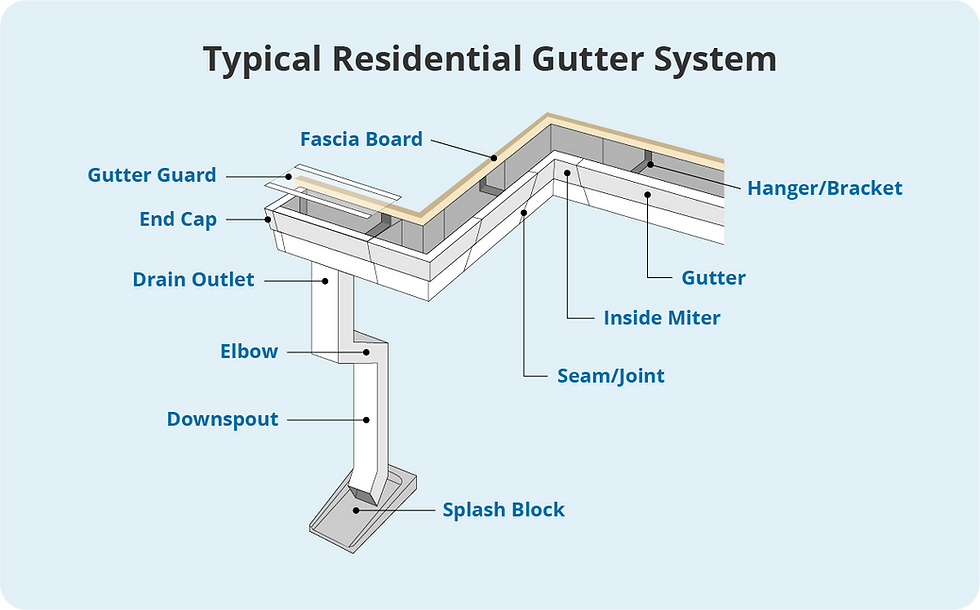
Your gutters do a great job collecting water off a big roof. But all of that water has to go somewhere — and where it lands is what protects, or threatens, your foundation. This guide covers why downspout drainage matters, how far from the house the water should end up, what it looks like when it goes wrong, and why the fix is almost always quick and inexpensive.
A gutter downspout should discharge roof water at least four to six feet away from the foundation, so the water can't pool against the house and saturate the soil along the footings. When a downspout is too short and drains right at the base of the wall, that water soaks the ground next to the foundation, where it can lead to erosion, settling, and basement or crawlspace moisture. The fix is usually simple and low-cost: add a downspout extension or splash block that moves the water out past the foundation.
Why does it matter where your downspouts drain?
A roof sheds a surprising amount of water, often hundreds or thousands of gallons in a single storm, and your gutters funnel all of it down through just a few downspouts. If those downspouts release that water right against the house, you've concentrated your entire roof's runoff into a few small spots along the foundation.
That causes problems in a few predictable ways:
Soil saturation against the foundation. Soil that stays soaked next to the footing can expand, contract, and lose bearing strength — which contributes to settling and foundation movement over time.
Basement and crawlspace moisture. Water pooling at the wall finds its way in through cracks, joints, and porous block, showing up as damp basements, musty crawlspaces, and the mold that follows.
Erosion. Concentrated runoff carves away soil and mulch, undermining grading, walkways, and patios, often digging a channel that funnels even more water back toward the house.
Here in eastern Missouri, where clay-heavy soils drain slowly and hold water against the foundation, getting roof water well away from the house matters even more.
How far from the foundation should a downspout drain?
Most guidance recommends directing roof water at least four to six feet away from the foundation — and farther is better. The goal is simple: get the discharge point well past the backfilled soil around the foundation, onto ground that slopes away from the house, so the water keeps moving instead of soaking in.
The diagram below, from InterNACHI, shows exactly what we're talking about, the difference between a short downspout that drains at the wall and a properly extended one that carries water out past the foundation.

This works hand in hand with proper grading: the ground around your home should slope downward and away from the foundation, so that once the downspout drops the water out past the wall, gravity keeps it heading away.
A real-world example: erosion at the downspout
Here's what it looks like in the field. During an inspection we documented a downspout discharging right at the foundation, with no extension carrying the water away. The result was visible erosion at the base of the downspout and soil washed out, with a channel cut into the ground exactly where you don't want one.

That channel is the tell. Once water starts carving a path, it concentrates even more runoff in the same spot on every rainfall, accelerating the soil loss and steering water back toward the foundation. Nothing was leaking and no gutter was broken; the only problem was where the water was being released. And that's a fix that costs a few dollars and a few minutes.
Why is this such a common finding and such a cheap fix?
We find short or missing downspout extensions on a large share of the homes we inspect. They're easy to overlook: extensions get bumped off by mowers, removed and never replaced, or simply never installed in the first place. Because each downspout "works" on its own, water does come out the bottom, and the problem stays invisible until you look at where that water actually goes.
The good news is that this is one of the least expensive items you'll ever see on an inspection report. A basic splash block or a flexible or roll-out downspout extension runs roughly $5 to $25 at any hardware store and installs in minutes, no tools or contractor required. For a cleaner look, water can be routed underground to a pop-up emitter farther out in the yard, that costs more, but even that is modest next to what foundation or basement-water repairs can run.
In short: it's a small, do-it-yourself fix that protects the single most expensive part of your home.
See how we document it
The clearest way to understand how we report on drainage and other findings is to open a real report. We've published three full sample reports you can click through just like a client would, with the photos, video, and plain-English findings in place. And if you want the bigger picture on the whole system, our full guide to gutters covers the rest.
When you're ready, see everything inside a Tech Inspect report or schedule your inspection, same-week availability, weekend appointments, and a report delivered within 24 hours.
Frequently asked questions
How far should a downspout drain from the house? Most guidance recommends at least four to six feet away from the foundation, onto ground that slopes away from the house. Farther is better, especially on clay soils or lots that slope toward the home.
Are downspout extensions expensive? No. They're one of the cheapest fixes on a typical inspection report. A splash block or flexible extension usually costs about $5 to $25 and installs in minutes. Underground routing to a pop-up emitter costs more, but is still modest next to foundation repairs.
Why does water at the foundation cause problems? Concentrated roof runoff soaks the soil against the foundation, which can contribute to settling and foundation movement, basement and crawlspace moisture, and erosion that undermines grading and hardscaping.
Is a short downspout really a big deal? On its own it seems minor, but it aims your entire roof's runoff at the most expensive part of your house. Because the fix is so cheap, it's almost always worth correcting as soon as you spot it.
Ready for an inspection that looks at where the water goes?
Same-week availability, weekend appointments, and a report delivered within 24 hours. See three full sample reports, explore everything inside the report, or schedule your inspection.
Tech Inspect Home Services LLC · 3580 Highway T, Marthasville, MO 63357 · 636-201-6366 · sean@techinspecthome.com