
Case Study: Blocked Soffits and a Gable Vent Turned This Attic Into a Sauna

Home Consultant tracks down why an upstairs room won't cool off
In this one I want to walk through an attic add-on that was quietly working against the homeowner and the room right next to it. There was an upstairs room that was hard to keep cool, and when I climbed into that attic during the inspection, it wasn't hard to see why. It felt like a sauna the second I opened it up, and every vent you'd want was technically there. On paper it looked fine. In real life almost no air was moving.
TL;DR
A homeowner mentioned an upstairs master suite that was hard to keep cool. The attic add-on above it, over the laundry and garage, felt like a sauna. It was 93 degrees outside, and the readings inside told the story: 93.2°F, 54.7% relative humidity, and a 79°F wet bulb, plus a little attic ambering on the wood. The soffit intake was blocked, and a gable vent sitting right below the ridge vent was short-circuiting what little airflow there was. My recommendation was to open the soffit intake, add baffles, block the gable vent, and monitor, so fresh air can come in low and exhaust high the way it's supposed to. Balanced attic ventilation just means air in low at the soffits and hot, damp air out high at the ridge.
What prompted the look?
The homeowner had already flagged one thing: an upstairs master suite that was hard to keep cool. That's a comfort complaint a lot of folks just live with and chalk up to "that room runs hot." When I got into the attic add-on that shares two walls with it, the reason wasn't a mystery for long.
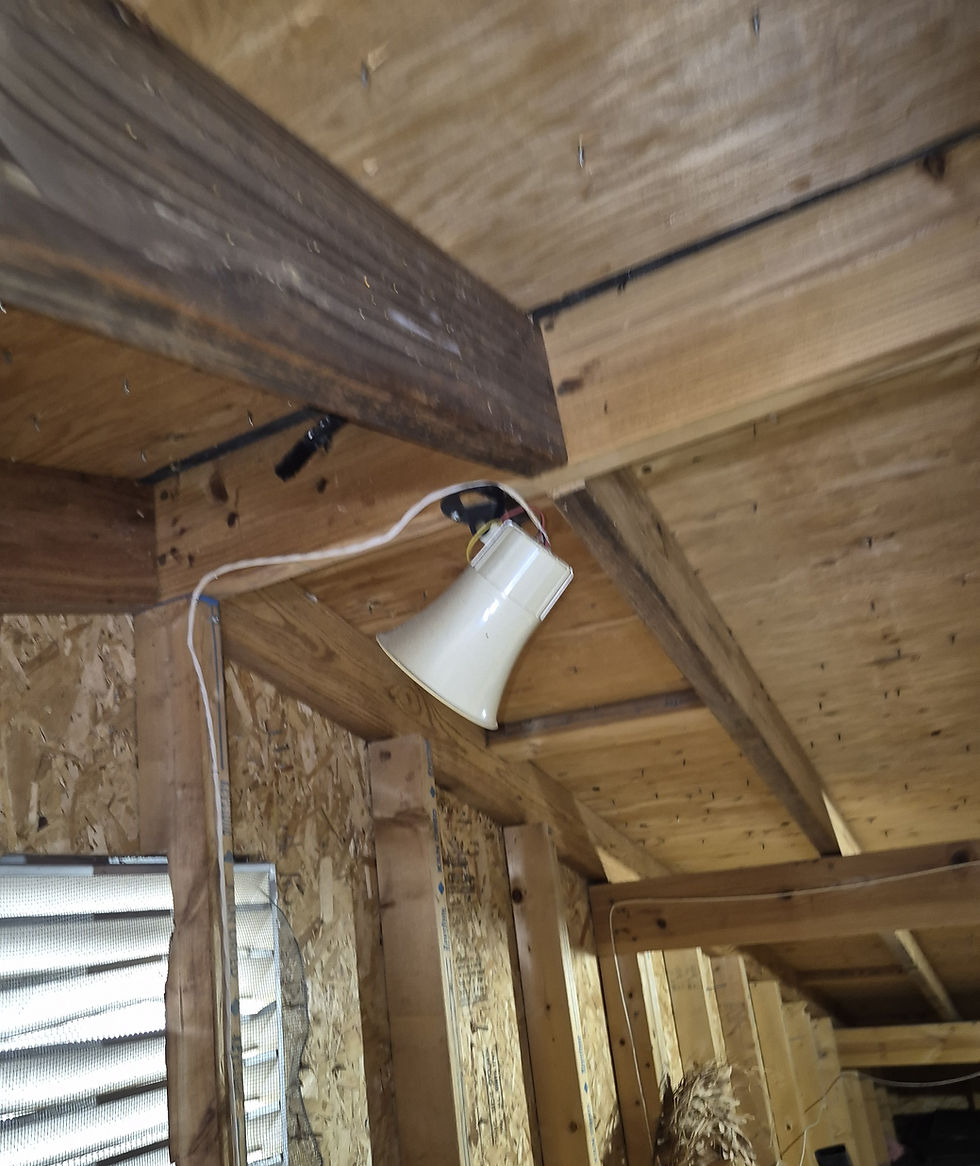
This attic was an add-on. When the roofline was extended, the new roof framing was built right over the top of the original garage roof, so the original roof decking is still sitting there underneath the newer roof. That tells you this space was added on later, not designed from the start as one vented attic. You can see the whole layout below.

Was it really that hot in there?
Yes. It was 93 degrees outside, and inside that attic it felt worse. The readings backed up the feeling: a dry bulb temperature (the plain air temperature) of 93.2 degrees, a wet bulb of 79 degrees (that reading factors in the moisture in the air), and relative humidity sitting at 54.7%. Standing in it was rough. The air was completely still, hot, and heavy. Part of this attic also sits over the bathroom and laundry room, so it's got living-space moisture feeding into it, in a space that couldn't exhale. Within minutes, I was complete soaked with sweat. It was cooler and much more comfortable standing on top of the roof in the sun during this inspection.
I also spotted a little attic ambering on the wood up there. Ambering is that yellowish, gold discoloration you get when the natural resin in the wood cooks out under sustained heat. On its own it's cosmetic, it's not mold, and by itself it doesn't prove there's moisture damage. But paired with the readings and the sauna feeling, it pointed to the same thing: this space has been running hot for a while with inadequate ventilation.

Why did it feel so muggy in there?
Think about a wet beach towel. Hang it outside on a breezy day and it's dry in an hour, because the moving air carries the water right off of it. Now take that same wet towel, stuff it in a gym bag, zip it shut, and leave it in a hot car. Come back the next day and it's still damp, warm, and kind of funky. Nothing dried out, because no air could get to it.
That attic was the gym bag. Warm air holds a lot of moisture, and with no airflow to carry it away, the heat and humidity just sat there and built up. When air doesn't move, your sweat can't evaporate either, which is why 93 degrees in that dead-still attic felt so much worse than 93 degrees outside.
Where was the airflow breaking down?
Two things were working against each other in this space.
First, there was no working low intake. Soffit vents are supposed to be the low intake, where fresh air enters the attic. On the north side, the soffit was blocked by insulation, so nothing could get in there. On the south side, the framing didn't leave a clear path to the soffits at the front of the garage. Either way, fresh air had no real way to get in down low.
Second, there was a short circuit up top. The gable vent sat very close to the ridge vent. With the soffits blocked, the ridge vent pulled the little air it could from the nearby gable vent, and that air went straight up and out the top. It never traveled down into the body of the attic. The diagram below shows exactly what that looks like.


So you had no air coming in low, and whatever air did move just looping across the very top and leaving. There was no real air exchange in the space at all. That's how you end up with a sauna, and how that trapped heat ends up pressing against the master suite next door and fighting the AC every time it tries to cool that room.
What I recommended
Here's the recommendation straight out of the inspection report, so you can see exactly how I document a finding like this.
Open the north-side soffit ventilation and install appropriate baffles as needed to maintain a clear airflow path. When the soffits are opened, also check the bathroom exhaust duct that is discharging at the soffit to be sure that it is properly sealed and secured. It appeared to be a half-bath, so there's not a larger concern with moisture expelling from this exhaust and being pulled back into the attic, which would defeat the goal. Ensuring that it is secured and sealed at the junction points. The existing gable vent should also be blocked so the ridge vent can function as the primary exhaust point and the north soffits as the primary intake point. Whenever a gable vent, ridge vent, and soffit combo are installed in the same location, it can disrupt the natural flow of air from low to high, causing air to become stagnant and not vent as intended. Blocking the gable, once the soffits are opened, is a necessary step, and could be done simply by installing a piece of plywood over the vent at the interior. After these corrections, monitor the attic for improved airflow, temperature, and humidity control. If adequate improvement is not achieved, recommend installing a thermostatically controlled attic fan. The goal is to establish a clear ventilation path that draws fresh air in through the soffits and moves it through the attic before exhausting it at the ridge.
The goal is to rebuild the path the air is supposed to take: in low at the soffits, through the attic, and out high at the ridge. Opening the north soffit and setting baffles keeps that intake clear even after the insulation settles again. Sealing the bathroom exhaust matters because a leaky one sitting right at the soffit would pull damp air straight back into the attic I just opened up. Blocking the gable leaves the ridge as the one clear exit up top. After that, monitor the attic, and if the numbers don't drop enough on their own, a thermostatically controlled attic fan is the next step. Cheapest and simplest fixes first, then more only if the attic tells us it needs it.
What happens next?
The nice part about a fix like this is it's low cost and it compounds with other fixes. Once the intake is open and the gable is blocked, that attic should start breathing again, and dropping the heat up there gives the master suite next door a real shot at staying cooler. As with every inspection I do, I'm a call, text, or email away if the homeowner wants to talk through the repair, the baffles, or whether that attic fan ends up being worth it after they've had a chance to see how the space behaves in the heat.
In Summary
Every vent in this attic existed. That's a common problem we encounter. Ventilation isn't about having all of the vents, it's about whether they work together as a system, with intake low and exhaust high. When the intake is blocked and the exhaust short-circuits, you can have a fully vented attic on paper that traps heat and moisture in real life, and sometimes makes the room next door miserable too. That's exactly the kind of thing I'm looking for during an inspection.
See how I document what I find
The clearest way to see how I report on a home is to open a real one. I've published three full sample reports you can click through just like a client would, photos, video, and plain-English findings and all. When you're ready, take a look at everything inside a Tech Inspect report or grab a spot on the schedule. Same-week availability, weekend appointments, and your report within 24 hours.
FAQ's:
Why is my upstairs room so hard to cool? Often it's the attic next to or above it. If that attic can't move heat and moisture out, that hot air sits against the walls and works against your AC. In this case, an attic with blocked soffit intake was doing exactly that to the master suite next door.
Can blocked soffit vents really cause attic heat and humidity? Absolutely. Soffits are the low intake for the attic. Bury them under insulation and no fresh air gets in down low, so the ridge vent has nothing to pull from and the whole thing stalls. Heat and moisture build up with nowhere to go.
Should I close my gable vent if I have a ridge vent? Generally, yes. On a ridge-and-soffit setup the ridge should pull its air up from the soffits. Leave a gable vent open right next to it and it short-circuits. Have your setup looked at before you change anything.
Is attic ambering the same as mold? No. Ambering is a yellow or gold discoloration from resin cooking out of the wood under heat. It follows the grain and hardens in place. Mold is fuzzy, sits on the surface, and smears. Ambering itself is harmless, but it's a good sign the attic runs hot, which points back to ventilation.
Do you check attic ventilation on an inspection? Every time. I look at the whole system, the vent types and how they're combined, the intake versus exhaust balance, and whether the soffit intake is actually open. Then I document what I find with photos and video.
Tech Inspect Home Services LLC · 3580 Highway T, Marthasville, MO 63357 · 636-201-6366 · sean@techinspecthome.com


