Junior Homeowner: How a House Works — A Coloring Book for Curious Kids

Most kids know what the rooms in their house are for. They know where the kitchen is, where they sleep, and that the thermostat somehow makes the house warmer or cooler.
But what happens behind the walls? Where does the water come from? What does the electrical panel actually do? Why does a house need gutters? And what exactly is hiding up in the attic?
Those are the kinds of questions behind Junior Homeowner: How a House Works, a new educational coloring book created to introduce kids to the different parts and systems that make a home work.
The idea is simple: take something every child sees every day—their house—and use it as an opportunity to learn.
Junior Homeowner: How a House Works combines coloring with simple explanations of the systems and components found in a real home, giving kids an approachable introduction to how houses are built and how they function.
What Is the Junior Homeowner Coloring Book?
This isn't meant to turn kids into contractors or home inspectors.
It's meant to make them curious.
Each section introduces parts of a house in a way that's easier for young children to understand. Instead of looking at a furnace, electrical panel, plumbing pipe, roof vent, or foundation as just another part of the background, kids can start learning what those things actually do.
The coloring-book format keeps the experience hands-on. Kids can slow down, look at the details in each illustration, color the components, and talk about what they're seeing with a parent or another adult.
That's really where the value is.
A picture of a water heater can turn into a conversation about where hot water comes from. A roof illustration can lead to questions about shingles, gutters, rain, and keeping water out of the house. An electrical page can introduce the idea that electricity travels through the home—but also reinforce that electrical equipment is something children shouldn't touch.

Learning How the Parts of a House Work Together
A house isn't one thing. It's a collection of systems that all have to work together.
The book introduces kids to areas and components such as:
Roofs, gutters and exterior components
Foundations and structural parts of the home
Plumbing and where water travels
Electrical systems and household power
Heating and cooling equipment
Attics, insulation and ventilation
Windows, doors and interior components
Basic home-safety concepts
The goal isn't technical detail. It's recognition and understanding.
If a child finishes the book knowing that gutters move rainwater away from the house, insulation helps control temperature, plumbing carries water, and the electrical panel distributes power, that's a pretty good start.

Why Teach Kids About Houses?
We spend a lot of time teaching kids how cars, animals, weather, computers, and the human body work.
The house they live in every day doesn't usually get the same attention.
That's a little surprising when you think about it.
Homeownership eventually comes with a long list of responsibilities: maintenance, repairs, safety, budgeting, and knowing when something doesn't look right. Those lessons don't need to start with a broken furnace and a repair bill.
They can start with curiosity.
Learning the basic parts of a house can also help children understand why adults do things like change filters, clean gutters, test smoke alarms, fix leaks, or call a professional when something isn't working correctly.
Something Parents Can Explore With Their Kids
One of the things I like most about this book is that it doesn't have to be a solo activity.
Parents can color alongside their kids, point out similar components around their own home, and answer questions as they come up.
You don't need to turn it into a lesson plan.
Sometimes it's as simple as, "See that picture? We have one of those in our basement."
That's enough to make the connection between the page and the real world.
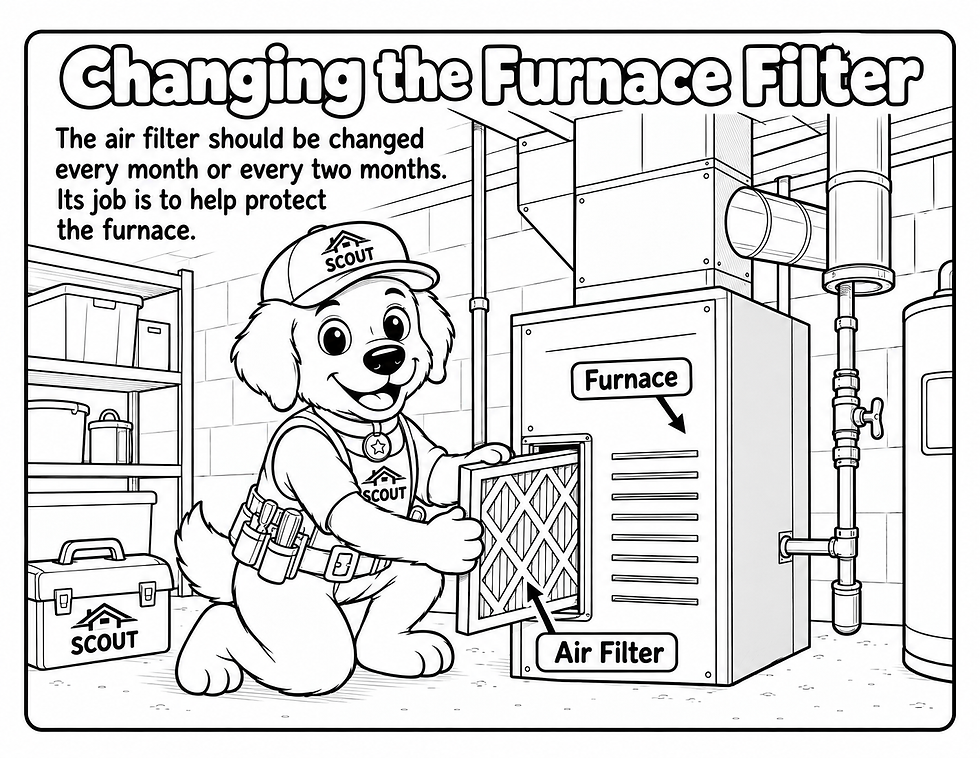
Building the Next Generation of Junior Homeowners
At Tech Inspect Home Services, a big part of what we do is help people understand their homes—not just hand them a list of things that are wrong. The Junior Homeowner idea takes that same approach and scales it down for kids.
Start with the basics. Make it understandable. Encourage questions.
And make learning about houses a little more fun.
Junior Homeowner: How a House Works is available on Amazon. View Junior Homeowner: How a House Works on Amazon
For more homeowner guides, maintenance resources, and practical information about how homes work, visit the Tech Inspect Home Services resource center.
The earlier kids understand their home, the better prepared they'll be to take care of one someday.