Kickout Flashing: The Small Part That Prevents Water Damage

Quite a bit of the water damage we find during inspections can be traced back to a missing part that costs a roofer a couple of dollars. It's called kickout flashing, and when it's left off, the first sign is usually a long stain running down the wall where a roof meets the siding, water that's been running down that wall, and often behind it, for years.
It's one of the more common defects we flag across St. Charles, Franklin, Warren, and Lincoln counties. It's small, it's cheap, and it's easy to overlook, which is exactly why it gets skipped so often, on new homes and old ones alike. Here's what it does, why a missing one matters more than it looks, and a real example we documented in the field.
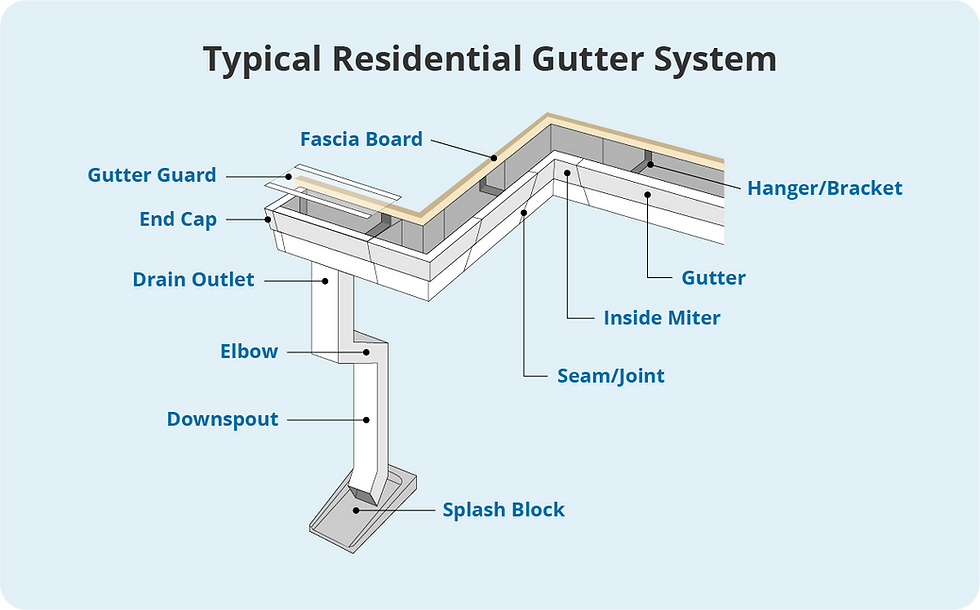
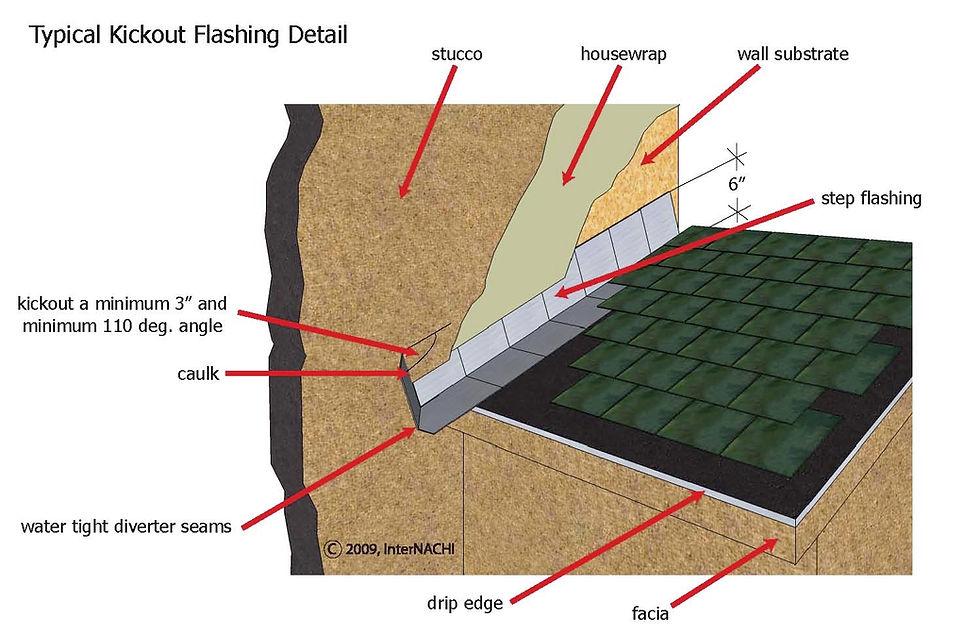
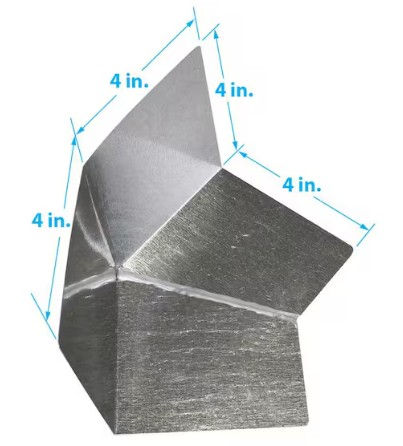
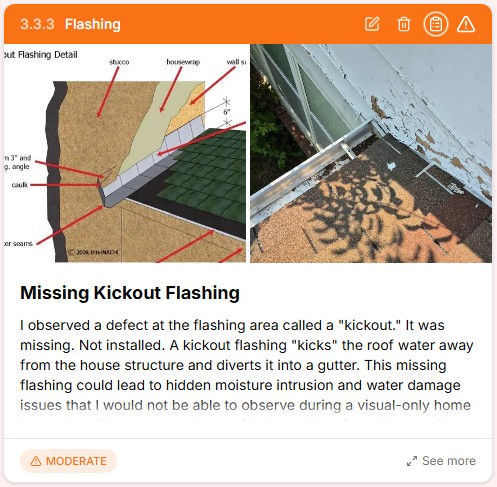
Kickout flashing is a small piece of flashing installed at the lower edge of a roof where it meets a vertical wall. Its job is to "kick" roof runoff out and away from the wall and into the gutter, instead of letting it run down against, and behind, the siding or brick. When kickout flashing is missing, water gets channeled into the wall covering, where it can cause staining, rot, mold, and hidden structural damage. Modern claddings like vinyl, fiber cement, and brick veneer can hide that damage for years before anyone notices.
What is kickout flashing?
Kickout flashing is a piece of metal flashing used to divert water where a roof ends against a wall. Picture a garage roof that runs into the two-story wall of the house: rainwater sheds down that roof and collects right at the corner where the roof meets the wall. Something has to help direct that water away from the wall and into the gutter, or else it can cause problems.
Kickout flashing is the small, angled piece at the very bottom of that roof-to-wall intersection. It sits at the end of the step flashing, the series of overlapping metal pieces woven between the shingles that carry water down the intersection, and it turns that water outward, away from the siding and into the gutter below. Without that final "kick," the water reaches the bottom of the wall and simply keeps going straight down.
Why does a missing kickout flashing cause problems?
When the kickout is missing, all the water that's been running down that roof-wall intersection pours straight down against the wall covering. A single roof plane can shed a surprising amount of water in a storm; we've covered how quickly that volume adds up in our post on gutters, and now it's all hitting one spot on the wall instead of going into the gutter.
From there, it works its way behind the siding or brick and into the wall assembly, where it can rot the sheathing and framing, soak the insulation, and grow mold inside the wall cavity. The tricky part is you often can't see it. Older wood siding shows water intrusion as peeling paint, but modern claddings, vinyl, fiber cement, and brick veneer, can hide the damage for years. By the time it surfaces, the repair is far bigger than the flashing that would have prevented it.
What do building codes say about kickout flashing?
Kickout flashing isn't just good practice, it's in the code. The International Residential Code (IRC), Section R903.2.1, requires flashing to divert water away from the point where the eave of a sloped roof meets a vertical sidewall. That requirement first appeared in the 2009 IRC and was written more clearly in the 2012 edition.
Two things are worth knowing. First, codes are adopted and enforced locally, and not every Missouri jurisdiction is on the same IRC edition, so treat R903.2.1 as the national standard for this detail, not a guarantee of what your town required when your home was built. Second, and more to the point: many homes were built before this was ever required, and even on newer homes it's frequently skipped by builders, roofers, and siding crews. That's why we find missing kickout flashing so regularly, on homes of every age.
A real example: stained brick from missing kickout flashing
Here's one we documented. On this home, a roof terminated against a brick wall with no kickout flashing installed. The result was heavy staining running straight down the brick below that intersection — the visible signature of water hitting and running down the wall, and behind it, instead of being kicked out into the gutter.

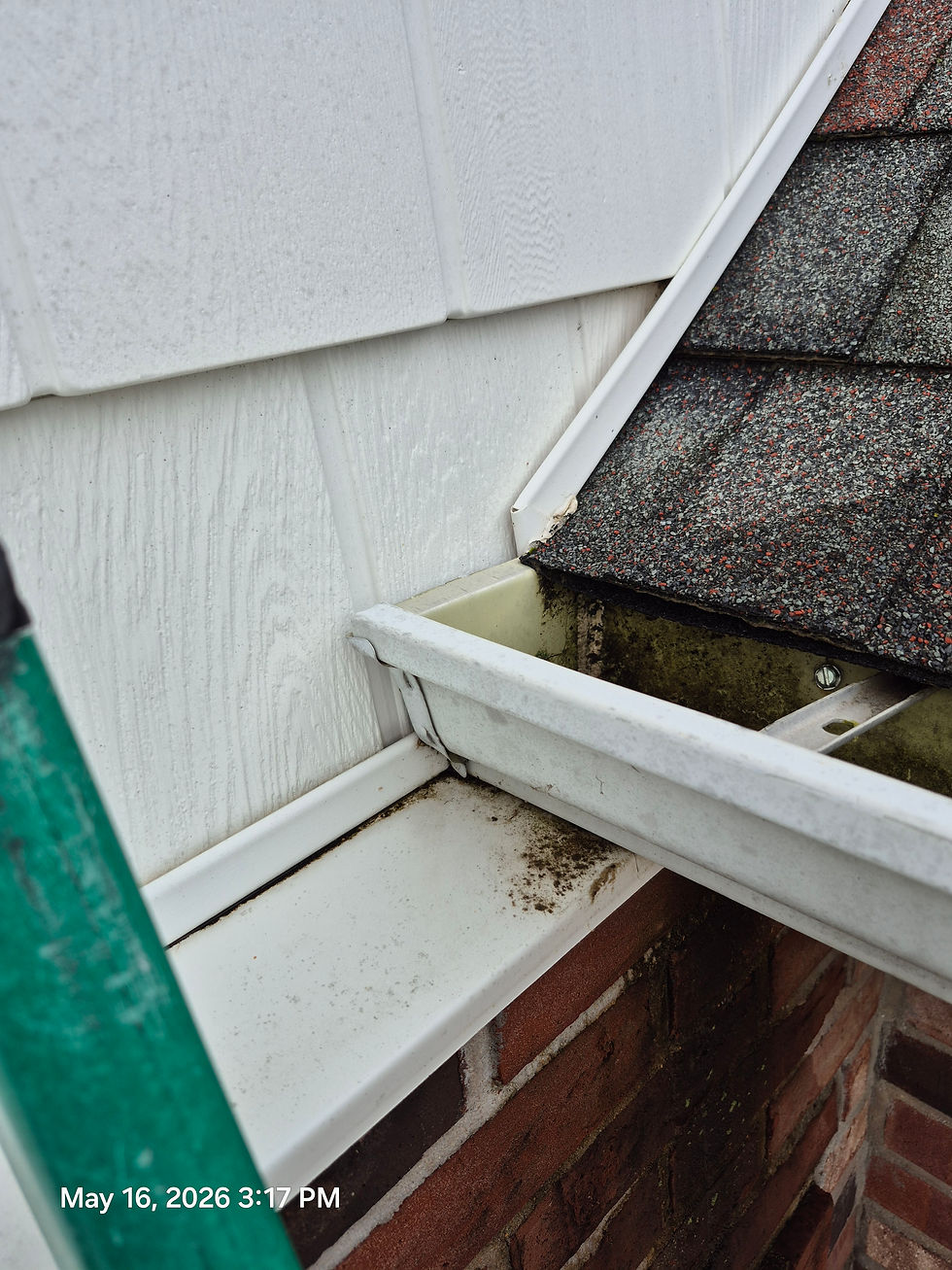
Brick veneer is porous, and it sits over a wall assembly that doesn't handle trapped moisture well. Staining like this is the wall telling on itself: water has been concentrating at that spot for a while. It's a textbook example of why this small detail matters: the flashing was missing, every other component looked fine, and water was quietly working behind the surface.
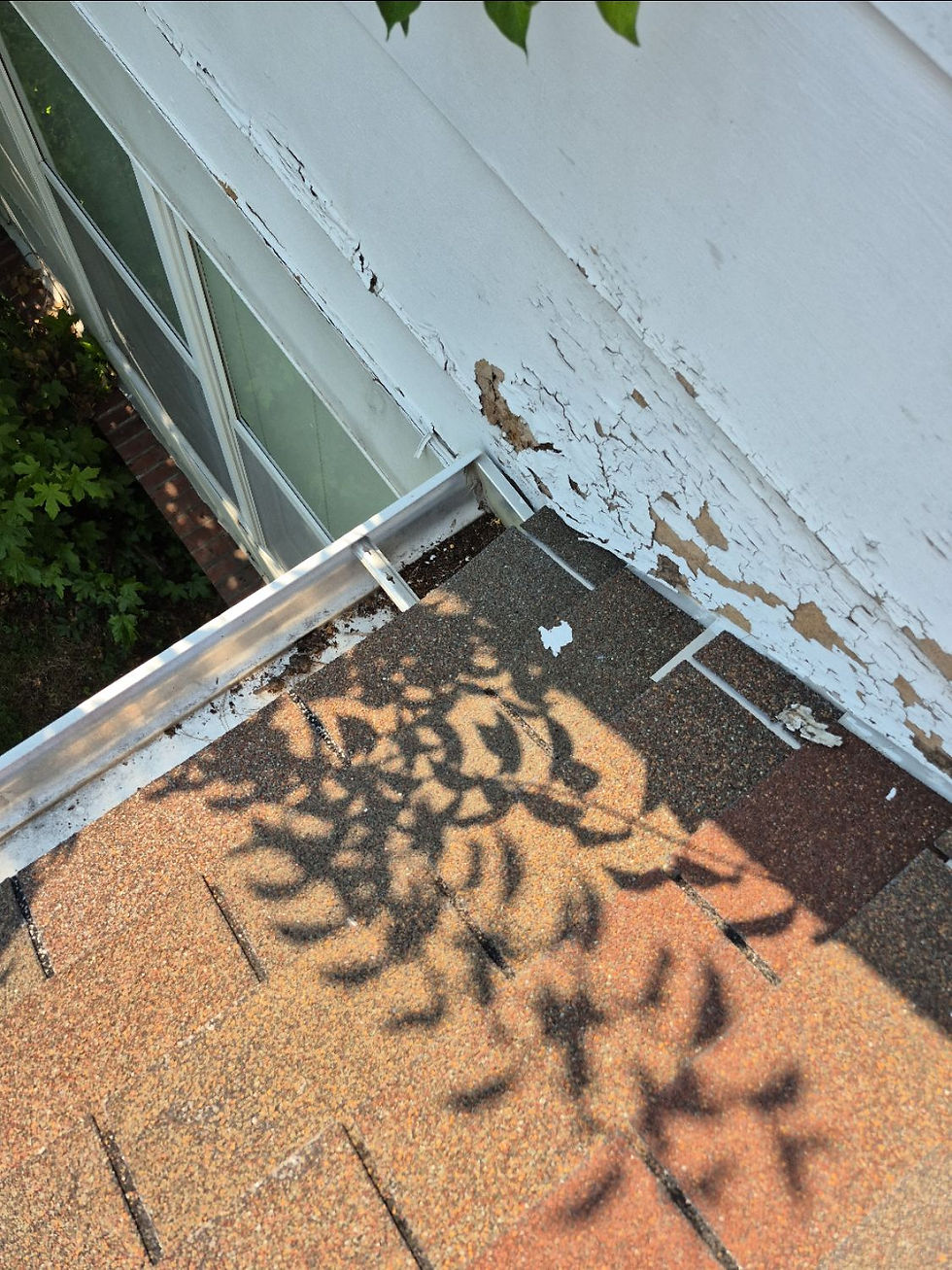
Another Example: Where water has caused damage over time
It often takes time, for water to damage building materials, but left unattended long enough, it will cause damage. In this example, we have siding that has been damaged and soaking up water. If this is what we see on the outside, what's behind it?
How urgent is a missing kickout flashing?
At Tech Inspect, anything that manages water or keeps it out of the home's structure sits near the top of our priority list — and kickout flashing is squarely a water-management detail. Because a missing one can drive moisture behind the wall covering, we generally treat it with more urgency than a cosmetic issue.
That said, how you handle it depends on context, and the call is yours. On a wall with no signs of staining or damage, some homeowners add the flashing as part of a planned re-roof or siding project. Where there's already staining — like the brick above — sooner is better, and it's worth having a qualified roofer open things up to check for hidden damage while they're there. Either way, the fix is inexpensive. The part is cheap; the damage it prevents usually isn't.
See how we document it
The clearest way to see how we report a finding like this is to open a real report. We've published three full sample reports you can click through just like a client would — photos, video, and plain-English findings in place. It takes about two minutes, and it shows exactly what you'll walk away with.
When you're ready, see everything inside a Tech Inspect report or schedule your inspection — same-week availability, weekend appointments, and a report delivered within 24 hours.
Frequently asked questions
What happens if a home doesn't have kickout flashing? Water that should go into the gutter runs down against and behind the wall covering, where it can rot sheathing and framing, soak insulation, and grow mold inside the wall. Because modern claddings like vinyl, fiber cement, and brick veneer can hide it, the damage is often well established before it's noticed.
Is kickout flashing required by code? Yes. IRC Section R903.2.1 requires flashing to divert water away from where a sloped roof eave meets a vertical sidewall, and it first appeared in the 2009 IRC. Local code adoption varies by jurisdiction, and many homes were built before the requirement — so plenty of homes don't have it.
Can kickout flashing be added to an existing home? Usually, yes. A qualified roofer can retrofit kickout flashing, and it's commonly added during a re-roof or siding replacement. If there's already staining or suspected water damage, it's worth checking behind the cladding at the same time.
Does Tech Inspect check for kickout flashing? Yes. We inspect roof-to-wall intersections and flag missing or improper kickout flashing, and we document what we find with photos and video.
Small part, Lasting protection
Kickout flashing costs almost nothing to get right, and its missing pretty often, this is exactly the kind of detail a thorough inspection is meant to catch. See three full sample reports, explore everything inside the report, or schedule your inspection.
Tech Inspect Home Services LLC · 3580 Highway T, Marthasville, MO 63357 · 636-201-6366 · sean@techinspecthome.com