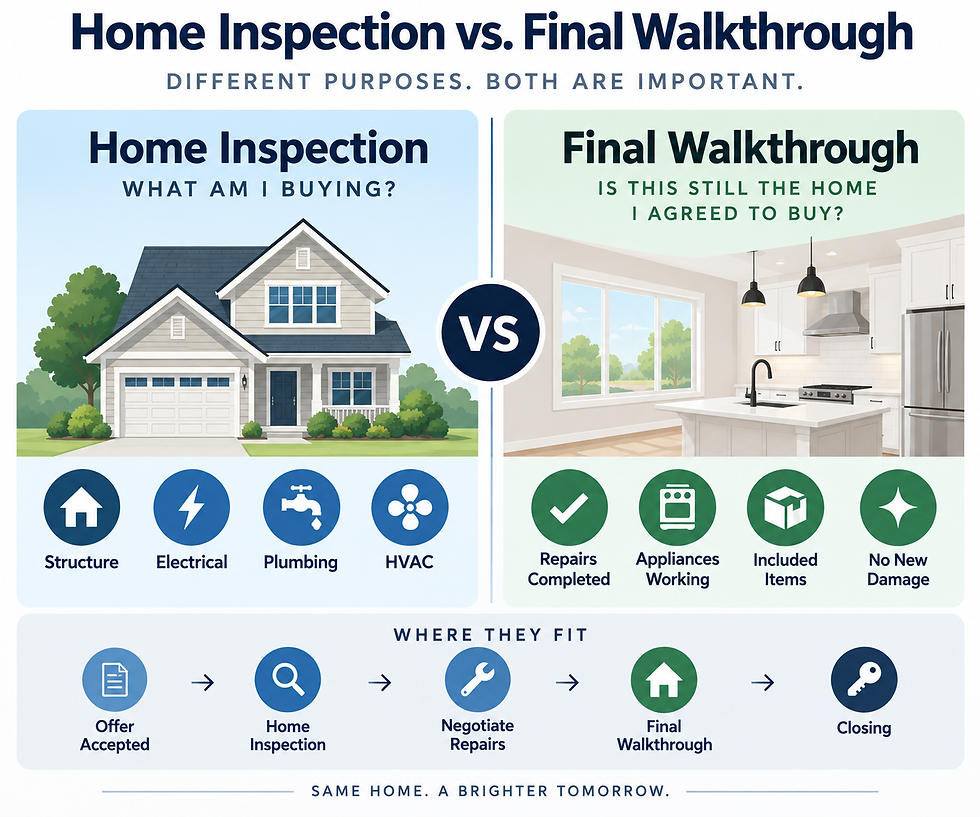
Seller Disclosure vs. Home Inspection: Why Buyers Need Both

When you buy a home in Missouri, you'll usually end up with two documents that describe the condition of the house. The first is the seller's disclosure, filled out by the people who've been living there. The second is your home inspection report, written by an inspector you hired to walk the home with a fresh set of eyes.
We get this question from time to time: "The seller's disclosure looks pretty clean. Do we still need an inspection?" Yes, you do, and it has nothing to do with whether the seller is being honest. We also say yes to that question, not because we provide inspection services, but because of the things directly observed in homes, even newer homes. It's important to understand that the seller's disclosure and inspection report are two documents, generated through different means and supporting different purposes.
A seller's disclosure is the seller's own written account of what they know about the home, such as past leaks, repairs, or known problems. A home inspection is an independent, visual examination of the home's accessible systems and components by an inspector the buyer hires. The disclosure tells you what the seller knows and remembers. The inspection documents what's visible on inspection day, including issues the seller may never have noticed. Buyers need both, because each one covers gaps the other can't.
What is a seller's disclosure?
A seller's disclosure is a form where the seller answers questions about the property: the roof, basement, plumbing, water intrusion, past repairs, and more. A lot of Missouri transactions use the Seller's Disclosure Statement published by Missouri REALTORS.
Missouri's rules are a bit different from many other states. Missouri doesn't have a broad law requiring sellers to complete a comprehensive disclosure form, and it's generally considered a "buyer beware" (caveat emptor) state. That has limits, though. Sellers can still be held responsible for lying about the home's condition or actively hiding a known defect, and licensed real estate agents are required under Missouri law to disclose adverse material facts they know about. There are also a few specific required disclosures, like whether the property was used to produce methamphetamine and, under federal law, known lead-based paint in homes built before 1978.
We're home inspectors, not attorneys. If you have questions about what a seller has to disclose, your agent or a real estate attorney is the right person to ask.
What does a home inspection find that a disclosure might not?
A disclosure is only as complete as the seller's knowledge, and sellers generally aren't required to go looking for problems. Most homeowners don't spend much time crawling around the attic or under the house.
That's where the inspection comes in. A home inspection is a non-invasive, visual examination of the home's accessible areas, following the InterNACHI Standards of Practice. We work from the roof to the foundation, through the attic and crawlspace, the electrical panel, HVAC, plumbing, and the interior, and we document what we find with photos and video.
A lot of what we find are things a seller could live with for years and never know about. Two examples from our own inspections:
A bathroom exhaust fan venting into the attic instead of to the outside, with mold growing at the ridge right above it.
Gable vents left open on a home with soffit and ridge vents, which short-circuited the airflow and left mold on the roof decking on one side of the attic.

In both cases, a seller who rarely goes into the attic could honestly check "no known mold" on the disclosure. The disclosure would be accurate. It just couldn't tell the whole story.
What does a disclosure tell you that an inspection can't?
A home inspection is a snapshot of the home on one day. Researching the property's history isn't part of a home inspection under our Standards of Practice. The seller has lived through several Missouri springs. We're there for a few hours.
A disclosure can fill in things we have no way of seeing, like:
whether the basement took on water during a heavy rain, even if it's bone dry the day we're there
past repairs, and who did them
previous storm damage or insurance claims
problems that come and go, like a furnace that only acts up during the coldest week of the year
A freshly painted basement wall can look perfectly fine on inspection day. If the disclosure mentions past water intrusion in that same spot, that's context you and your inspector want to have.
How do the disclosure and the inspection work together?
Here's a simple tip: send your inspector a copy of the seller's disclosure before the inspection, along with anything that caught your eye during showings. It won't change what or how we inspect, but it tells us where to slow down and add extra documentation.
When a disclosure lists a past repair, we can document the visible condition of that area today. What we can't do is verify permits, confirm who did the work, or tell you whether it was done to code. For that, ask the seller for receipts and paperwork, and bring in a qualified contractor if something doesn't look right.
REPORT LANGUAGE: illustrative example of how a disclosed item reads in our report: Observation: Water staining was observed on the ceiling drywall below the bathroom. The seller's disclosure notes a prior plumbing leak at this location that was reported as repaired. Implication: Staining can remain after a leak is fixed, but it can also indicate a leak that is still occurring. Hidden moisture can lead to damaged drywall, framing, and mold growth. Recommendation: Ask the seller for documentation of the repair. Monitor the area for changes, and have a licensed plumber evaluate if the stain grows or moisture returns.
Sometimes the inspection finds something that isn't on the disclosure at all. That doesn't automatically mean anyone was dishonest. Often it's something the seller simply never knew about. Either way, it's worth a conversation with your agent while you're still inside your inspection window, which is usually only 10 to 15 days. Your agent will help you decide how to handle it in negotiations.
Should sellers get a home inspection before selling?
Yes, a pre-listing inspection gives you a look at what a buyer's inspector is likely to find before your home hits the market, so you can repair items, get quotes, or price the home accordingly. If the inspection turns up something you didn't know about, talk with your agent about how it affects your disclosure. You can read more in our post on why a pre-listing home inspection is a seller's best secret weapon.
The bottom line
The seller's disclosure tells you what the people who lived there know. The inspection tells you what an independent inspector can see today. Put them side by side, and you get a much clearer picture of the home you're buying, while you still have time to act on it.
See how we document what we find
The easiest way to understand what you'll walk away with is to open a real report. We've published three full sample reports you can click through just like a client would, with photos, video, and plain-English findings in place.
Frequently asked questions
Is a seller's disclosure required in Missouri? Missouri doesn't have a broad law requiring a comprehensive seller's disclosure form, and it's generally considered a "buyer beware" state. Many Missouri transactions still use the Missouri REALTORS Seller's Disclosure Statement, and some disclosures are required, such as past methamphetamine production and, under federal law, known lead-based paint in homes built before 1978. Sellers can also be held liable for fraud or hiding known defects. Ask your agent or a real estate attorney about your situation.
If the seller's disclosure looks clean, do I still need a home inspection? Yes. A disclosure only covers what the seller knows, and sellers generally aren't required to look for problems. A home inspection is an independent, visual examination that can document issues the seller never noticed, like attic ventilation problems or moisture in a crawlspace.
Does the home inspector review the seller's disclosure? It isn't a required part of a home inspection, but it helps. Sending your inspector the disclosure ahead of time lets them pay closer attention to disclosed areas and document them in the report.
Can a home inspector verify repairs listed on the seller's disclosure? A home inspector can document the visible condition of a repaired area on inspection day. A home inspector doesn't verify permits, confirm who did the work, or determine code compliance. Ask the seller for receipts, and bring in a qualified contractor for anything that needs a closer look.
What if the inspection finds something the seller didn't disclose? Talk with your agent while you're still inside your inspection window. It doesn't automatically mean the seller was dishonest, since many issues are hidden from everyday view. Your agent can help you decide how to address it.
Should a seller get a pre-listing inspection before filling out the disclosure? It can help sellers find issues before a buyer does. If a pre-listing inspection finds something the seller didn't know about, the seller should talk with their agent about how it affects the disclosure.
Ready to see the whole picture before you close?
Same-week availability, weekend appointments, and a digital report delivered within 24 hours. See three full sample reports, explore everything inside the report, or schedule your inspection.
Tech Inspect Home Services LLC · 3580 Highway T, Marthasville, MO 63357 · 636-201-6366 · sean@techinspecthome.com