Can I Use the Seller's Pre-Listing Inspection Instead of Getting My Own?

You found a house you like. The listing agent sent over a copy of the seller's inspection report, or maybe there's a flyer on the kitchen counter with a QR code that pulls the report up on your phone. Now you might be wondering if you even need your own home inspection.
That's a great question to ask. We do pre-listing inspections for sellers and buyer's inspections for buyers across St. Charles, St. Louis, Franklin, Warren, and Lincoln counties, so we see both sides of the table. Our advice doesn't change: read the seller's report thoroughly, decide whether you're comfortable with it, and then make the decision. It's your choice, whether to use the sellers inspection or procure your own.
Yes, a buyer can choose to use a seller's pre-listing inspection report instead of hiring their own home inspector. Before you do, read the full report. Check when the inspection was done, who performed it, what wasn't inspected, whether problems are clearly explained with photos, and what's been repaired since. If the report is recent and thorough, and you're comfortable with the level of detail, using it is a reasonable decision. If anything leaves you unsure, you can still hire your own inspector. Keep in mind the seller was the inspector's client, so the report was written for the seller, and then shared with you.
What is a pre-listing home inspection?
A pre-listing inspection is a home inspection the seller orders before the house goes on the market. Ours follows the same InterNACHI Standards of Practice as a buyer's inspection and covers the same major systems. The main difference is who hired the inspector. The seller is the client, gets the report first, and decides who else sees it.
InterNACHI encourages sellers to make the report, along with receipts for any repairs, available to buyers. For the seller's side of the story, we wrote about how a pre-listing inspection helps sellers.
Can a buyer use the seller's inspection report?
Yes. Nothing requires you to hire your own inspector. Some buyers read the seller's report, are comfortable with it, and move forward. Others decide they want an inspector working for them. Both are reasonable choices.
What should a buyer look for in a seller's inspection report?
Open the full report, grab a cup of coffee, and work through these questions.
When was the inspection done? A report shows the home's condition on inspection day. If several months or a season or two have passed, things can change. Water heaters quit, storms damage roofs, and new leaks can happen.
Who did the inspection? Missouri doesn't license home inspectors, so look for certification through a national organization like InterNACHI, plus reviews and proof of insurance. It's the same concept; we'd give you on how to choose a home inspector.
Are you looking at the full report? A summary lists the problems. The full report also shows what was inspected and what the inspector couldn't get to. Ask for the full version.
What wasn't inspected? Look for the limitations. Was the roof walked, flown with a drone, or viewed from the ground? Could the inspector get into the attic and crawlspace? Was anything blocked by storage, or were utilities off? Every limitation is a spot nobody looked at closely.
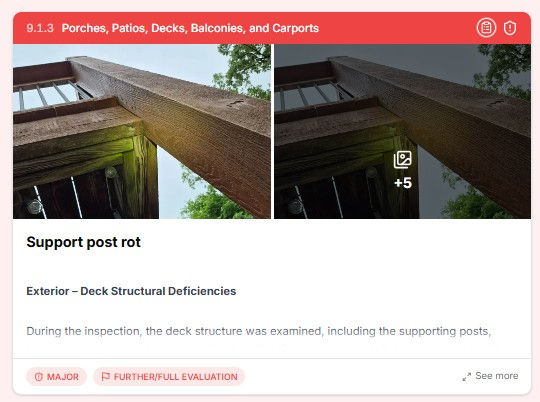
Are problems clearly explained? A good report tells you what was found, why it matters, and what to do about it, backed by photos and ideally video. If you can't tell how serious a finding is, that's a gap.
What's been fixed since? Ask for receipts, and ask whether the repairs were re-inspected. That carries a lot more weight than a verbal "it's been taken care of."
Does it cover what you care about? A standard home inspection doesn't include radon testing, a sewer scope, a termite (WDO) inspection, mold testing, or well and septic evaluations. If those matter for this house, ask whether the seller ordered any. If not, you'll need to arrange them yourself.
What are the limits of relying on someone else's report?
Even a great pre-listing report has a few limits you should know about.
You weren't the client. The seller signed the inspection agreement, and you weren't part of it. What that means for you if something gets missed depends on your contract and the law, so it's a good question for your agent or a real estate attorney.
You miss the walkthrough. With your own inspector, you can meet them at the end, see the issues in person, and ask about what you care about most. With someone else's report, you're working from what's on the page.
No inspection catches everything. A home inspection is a visual, non-invasive look at the readily accessible parts of the home. Some problems hide behind walls or under flooring. That's true of the seller's inspection and yours.
When does it make sense to use the seller's report?
If the report is recent, you have the full version, it was done by a certified inspector, the limitations are minor, and the problems are clearly documented with photos, using it can be a reasonable decision. It also gives you a head start. You can see the home's condition before you write an offer, start budgeting, and line up contractor quotes early.
Before you shorten or waive your inspection contingency, talk it through with your agent. That's a contract decision, and your agent is the right person to help you with it.
When should you get your own inspection?
If anything in that checklist left you uneasy, you can still hire your own inspector. Buyers often do when:
The report is months old, or a big storm has come through since.
Major areas weren't accessible, or the findings are vague.
It's an older home, a fixer-upper, or a rural property with a private well or septic system.
You noticed something during a showing and want a closer look.
You're a first-time buyer and want to learn the house with an inspector.
You just want an inspector working for you. That's a perfectly good reason.
If you do get your own, hang on to the seller's report. Compare the two, confirm which repairs were completed, and use it to plan your time inside an inspection window that's often only 10 to 15 days.
In Summary:
Read the entire pre-listing report, including the limitations. If it clearly lays out the problems and you're comfortable with the report and the level of detail, you can decide to use it. If you're not, schedule your own home inspection. Either way, it's your decision, and nobody should rush you into it.
Selling? Give buyers a report they can trust.
A home inspection before selling only helps if buyers trust the report, so we build our pre-listing inspections around the same questions buyers ask. You get the full Tech Inspect report with photos, video, and plain-English findings within 24 hours, plus a QR code flyer for your open house, and you can market your home as Move-In Certified. After repairs, we can re-inspect those specific items so your receipts have a second report backing them up.
Read why a pre-listing inspection is a seller's best secret weapon, or see what's included in our complete home inspections.
Frequently asked questions
Do I need my own home inspection if the seller already had one? It isn't required. It's your choice. Read the seller's full report and check when it was done, who did it, and what wasn't inspected. If you're comfortable with it, you can decide to use it. If not, you can hire your own inspector.
Is a pre-listing inspection the same as a buyer's inspection? At Tech Inspect, a pre-listing inspection follows the same InterNACHI Standards of Practice and covers the same major systems as a buyer's inspection. The main difference is the client. The seller hires the inspector and receives the report.
How old is too old for a pre-listing inspection report? There's no universal rule. A report reflects the home's condition on the day of the inspection, so the older it is, the more likely something has changed. If several months or a change of season have passed, ask the seller what's changed or consider your own inspection.
Who does the seller's home inspector work for? The seller. The seller is the client who signed the inspection agreement. If you plan to rely on the report, ask your agent what that means for you.
Does a pre-listing inspection include radon, termite, or sewer testing? Not as part of a standard home inspection. Radon testing, sewer scopes, termite (WDO) inspections, mold testing, and well and septic evaluations are separate services. Ask whether the seller ordered any of them. In Missouri, a formal termite inspection must be performed by someone licensed as a pesticide applicator through the Missouri Department of Agriculture.
Does Missouri license home inspectors? No. As of 2026, Missouri doesn't have a state license for home inspectors. Look for certification through a national organization like InterNACHI, along with proof of insurance and good reviews.
Ready to make your decision?
Buying? Schedule your own inspection with same-week availability, weekend appointments, and a report delivered within 24 hours. Want to see what a thorough report looks like before you compare? Click through three full sample reports. Selling? Book a pre-listing inspection and give buyers a report they can trust.
Tech Inspect Home Services LLC · 3580 Highway T, Marthasville, MO 63357 · 636-201-6366 · sean@techinspecthome.com