
Why We Won't Run the AC during a Fall Inspection, and What That Means for You

During a fall or winter inspection, there's one system we may not turn on at all: the air conditioner. It surprises buyers, you're paying for a thorough inspection and you expect every system to be run during the inspection, but on a cool day, running the AC can damage the very equipment we're there to evaluate.
As the weather cools in the fall across Missouri, it creates a very real service limitation for the inspector and the home buyer. The last thing we want to do is cause harm to a home. Fortunately or maybe unfortunately (after all isn't fall supposed to be cool?), we do get those sporadic 70*+ days in the St. Louis area, so if we encounter one of those on inspection day, we can still run the A/C unit.
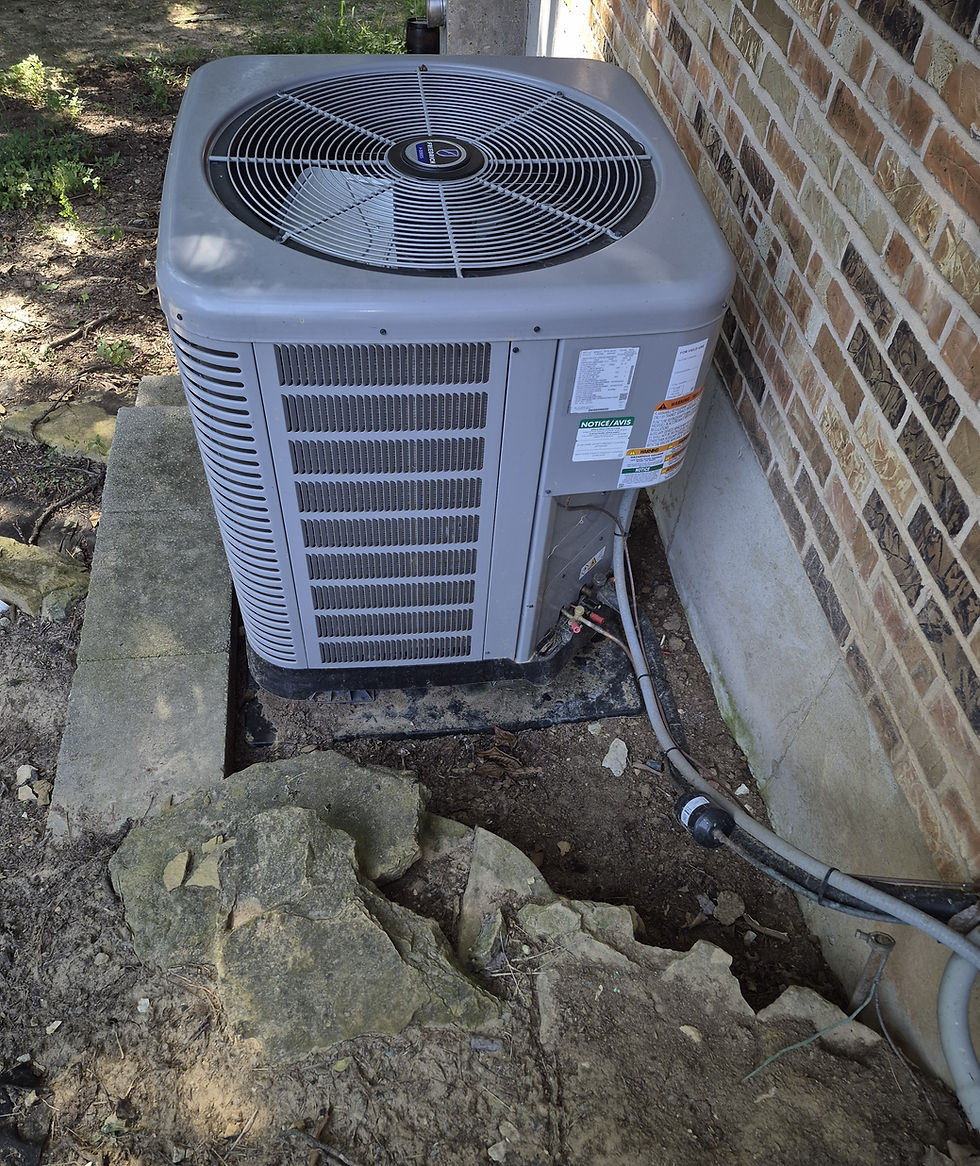
When the outdoor temperature is below 65°F, a home inspector generally will not operate the central air conditioning system, because running an AC in cold weather can damage the compressor. This is documented in the report as an inspection limitation, not a defect. The inspector will instead ask the homeowner about the system's age and past performance and recommend a follow-up once the weather warms. Similar seasonal limits apply to snow-covered roofs and winterized plumbing.
Why does the season affect what an inspection can test?
A home inspection is a visual, non-invasive evaluation of the systems we can safely operate and observe on the day we're there. That last part matters. We test systems under the conditions that exist at that moment, and some systems are only designed to run within a certain temperature range.
That isn't unique to inspections — your AC, your outdoor faucets, even your roof all behave differently in January than they do in July. When conditions fall outside the safe range to operate something, the honest move is to document the limitation, tell you what we could and couldn't confirm, and point you toward the next step. Guessing helps no one, and it can put you at risk.
Why won't the inspector run the AC when it's cool outside?
Central air conditioners and heat pumps move heat out of your home by circulating refrigerant, and they depend on that refrigerant and the compressor's oil moving at the pressures the system expects. When it's cold outside, those pressures drop and the oil doesn't circulate the way it should. Run the system in those conditions and you risk liquid refrigerant flooding back to the compressor — which can mechanically damage the single most expensive part of the unit. A compressor replacement can run well into the thousands.
That's why manufacturers set a minimum outdoor temperature for operation, and why the widely followed guideline in our industry is to leave the AC off when it's below roughly 65°F. We're not going to gamble with the compressor on a home you're about to buy just to watch cold air come out of a vent for a minute.
When this happens, the exact language you'll see in your report reads:
Because the outside temperature was too cool to operate the air conditioner without the possibility of damaging the system, I did not operate the cooling system. Inspection restriction. Recommendation: ask the homeowner about the system, including past performance.
It's flagged as an inspection limitation — a note that we couldn't safely evaluate the system under the right conditions, not a finding that something is wrong with it.
What should you do if the AC couldn't be tested?
You still have good options — you're just gathering the information a different way.
Ask the sellers directly. The report's recommendation is to ask the homeowner about the system and its past performance. When did they last run it? Did it cool the house evenly? Any recent service or repairs? Sellers live with the system and usually know its quirks.
Look at the paper trail. Service records, repair receipts, or a maintenance sticker on the unit tell you a lot about the system's age and how well it's been kept up.
Note the age and lifespan. We document the equipment's make, model, and age in the report and pair it with typical-lifespan context, so you know roughly where it sits in its service life. You can map that out using the free life-expectancy chart on our Resources page.
Schedule a follow-up when it warms up. Once outdoor temperatures climb back above the threshold, an HVAC technician — or a return visit — can run the system and confirm it cools properly.
None of this leaves you flying blind. It just means confirmation happens in steps.
What else can cold weather limit during an inspection?
The AC gets the most attention, but a fall or winter inspection has a few other seasonal blind spots worth knowing about:
Snow or ice on the roof. The Standards of Practice don't require an inspector to remove snow, ice, or debris to view the roof surface. If the roof is covered, parts of it can't be fully evaluated, and we'll note it. We still use our drone and a ladder to see what we safely can.
Winterized or shut-off plumbing. Vacant and seasonal homes often have the water shut off, pipes drained, or the water heater turned down for the winter. If the water's off, fixtures and supply lines can't be fully tested.
Shut-off exterior faucets. Outdoor hose bibs are commonly closed at an interior shutoff to prevent freezing, which means they may not be testable at the time of the inspection.
Leaf and snow cover outside. Grading, drainage, walkways, and the base of the foundation can be hidden under leaves or snow, limiting what's visible.
The theme is the same across all of them: we document exactly what we could and couldn't confirm, so there's no ambiguity later.
How does the warranty program help with what couldn't be tested?
When a system like the AC can't be fully run during your inspection, our Client Protection Program is designed to give you added protection in the period after the inspection — coverage that can help offset a covered issue that surfaces within the program's window, generally around 90 days.
Think of it as a backstop for exactly this situation: you did everything right, the system simply couldn't be operated safely on inspection day, and you'd rather not carry all of that risk into the first few months of ownership. The specific systems covered, the length of coverage, and the terms are laid out on the program page — worth a couple of minutes so you know what's protected before you close.
To be clear, it's added protection, not a promise that nothing will ever go wrong. But for the systems the season kept us from testing, it's a meaningful cushion, and provides some peace of mind.
The bottom line
A good inspection isn't about flipping every switch no matter the conditions — it's about telling you the truth about the home, including the honest limits of what the day allowed. When the weather won't let us safely run the AC, we say so plainly, show you how to fill in the picture, and back it up with coverage for the months ahead.
See how we document it
The clearest way to understand how we handle limitations and findings is to open a real report. We've published three full sample reports you can click through just like a client would — with the photos, video, and plain-English findings in place.
When you're ready, see everything inside a Tech Inspect report, ask us about the Client Protection Program, or schedule your inspection — same-week availability, weekend appointments, and a report delivered within 24 hours.
Frequently asked questions
Why won't a home inspector run the AC in cold weather? Running a central air conditioner when it's too cold outside can damage the compressor. At low outdoor temperatures, refrigerant pressures drop and the compressor's oil doesn't circulate properly, which can allow liquid refrigerant to return to the compressor and cause mechanical damage. Manufacturers set a minimum operating temperature, so inspectors leave the system off rather than risk it.
What temperature is too cold to run the air conditioner during an inspection? As a widely followed guideline, the AC is generally not operated when the outdoor temperature is below about 65°F at the time of the inspection. Below that, running the system risks compressor damage.
Does an untested AC mean something is wrong with the system? No. It's recorded as an inspection limitation, not a defect — it simply means conditions weren't safe to operate the system that day. The report notes what couldn't be confirmed and recommends a follow-up.
What should I do if my inspection couldn't test the AC? Ask the sellers about the system's age and past performance, review any service records or receipts, note the equipment's documented age and typical lifespan, and schedule a follow-up once the weather warms so a technician can confirm it cools properly.
Can the roof be inspected if it's covered in snow? Not fully. The Standards of Practice don't require an inspector to remove snow, ice, or debris to view the roof surface. Covered areas are noted as a limitation, though we still evaluate what we can safely see with a ladder and drone.
Does the warranty program cover systems that couldn't be tested? Our Client Protection Program is designed to provide coverage in the period after the inspection — generally around 90 days. The specific systems covered and the terms are detailed on the program page, so review it to see exactly what's protected before closing.
Ready for an inspection that's honest about what it finds — and what it can't?
Same-week availability, weekend appointments, and a report delivered within 24 hours. See three full sample reports, explore everything inside the report, or schedule your inspection.
Tech Inspect Home Services LLC · 3580 Highway T, Marthasville, MO 63357 · 636-201-6366 · sean@techinspecthome.com


